




Right-click on the code to copy the image.
Note: On an ASP portal, the link behind the code is portal specific!
Recommendation
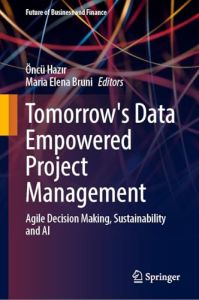
Contemporary project management is using models that harness data analyticsand artificial intelligence (AI) to address current business concerns. The advances of today’s “fourth industrial revolution” are transforming the issues facing project managers. This expert collection edited by Öncü Hazır and Maria Elena Bruni reports that while AI and other digital technologies, such as Blockchain, are creating new opportunities and practices for project managers, they are also adding new risks. Therefore, project management’s ethics and sustainability have become increasingly important. This compilation offers smart, applicable insights for project managers, their higher-ups, and their teams.
Summary
About the Authors
Öncü Hazır, a professor at Rennes School of Business in France, co-authored An Introduction to Project Modeling and Planning. Maria Elena Bruni, an associate professor of Operations Research at the University of Calabria, is a collaborating member of the CIRRELT, Montreal.
Learners who read this summary also read
Related Skills

AI Transformation

Management

Drive Project Management

Leverage AI for Management

Digital Transformation

Discover AI Use Cases

Discover and Understand Digital Technologies

Drive AI Transformation

Entrepreneurship

Leadership

Leverage AI for Leadership

Leverage AI for Product Development

Leverage AI in Your Daily Tasks

Production and Logistics

Understand AI

Workplace Skills

Discover AI Use Cases in Construction

Discover and Understand Data Analytics and Big Data

Use AI for Supplier Risk Monitoring

Manage Project Stakeholders

Use AI for Generating Ideas

Guide Teams Through AI Transition

Use AI for Resource Planning

Discover AI Use Cases in Transport and Logistics

Discover AI Vendors for Production & Supply Chain

Use AI for Production Scheduling

Use AI for Replenishment Planning

Drive AI Adoption in Teams

Use AI for Warehouse Optimization

Use AI for Process Optimization

Use AI for Disruption Monitoring

Use AI for Inventory Optimization

Use AI for Production & Supply Chain

Understand Generative AI

Comment on this summary