
Skip navigation
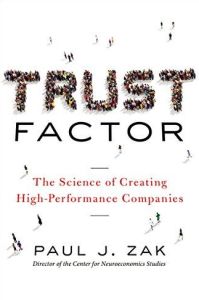
Trust Factor
Book

Trust Factor

The Science of Creating High-Performance Companies

HarperCollins Leadership, 2017 more...

Buy the book


Editorial Rating

9

getAbstract Rating

  • Applicable
  • Concrete Examples
  • Inspiring

Recommendation

While some leaders might decry “softer” management theories, neuroscience proves that treating your staff members like adult human beings and trusted colleagues pays off. In this engaging and accessible read, neuroeconomist Paul J. Zak shows how creating a “culture of trust” can turn around organizations that might be bound for failure. Based on findings from numerous scientific experiments, Zak examines trust, suggests eight areas to focus on, and outlines practical and manageable steps to bolster workplace bonds and employees’ effectiveness.

Summary

Improving trust in your organization increases performance, productivity and talent retention.

Every organization has a culture, whether it’s created intentionally or not, and that culture directs how people will behave. Successful organizations create cultures that are conducive to intrinsic motivation, high performance and cooperation. Trust is the pivotal ingredient in such a culture.

To experiment with the policy changes that build a trusting environment, define what you want to measure and how. Explain to your staff members the changes you’re making and what you hope these changes will achieve. Implement the changes and, after a period of time, measure the results. If a change proves effective, keep it and move on to the next experiment. If not, dismiss it – and move on to the next experiment.

To build a trusting corporate culture, follow policies listed according to the acronym “OXYTOCIN” – the hormone that trust releases.

If people show they trust you, your brain releases the neurochemical oxytocin, which increases empathy. That supports both the willingness to cooperate and the ability to ...

About the Author

Paul J. Zak is a professor of economics, psychology and management at Claremont Graduate University, California, where he founded the Center for Neuroeconomics Studies, a research laboratory that studies how people make decisions. 


Comment on this summary

More on this topic

Related Skills

Advance Your Career
Be Creative
Become a Self-Driven Learner
Become More Adaptable
Build Confidence
Career
Communicate Effectively
Develop the Organization
Digital Transformation
Enable Digital Organization
Enhance Cybersecurity
Execute Digital Operations
Foster a Culture of Innovation
Human Resources
Lead Ethically
Lead Strategically
Manage Corporate Communications
Manage Learning and Development

Manage Performance
Manage Teams and Departments
Management
Marketing
Optimize Workforce Performance
Promote Diversity, Equity, and Inclusion
Workplace Skills
Implement Agility
Manage Your Leadership Impact
Sleep Well
Leverage Your Strengths
Foster Team Culture
Foster Ownership in Others
Lead Yourself
Place Talent Strategically
Set Performance Standards
Support Internal Mobility
Enhance Team Agility
Navigate Leadership Challenges
Practice Servant Leadership
Cultivate Positivity
Embrace Change
Enhance Your Skill Set
Ensure Accountability in Teams
Engage in Job Crafting
Develop Self-Mastery
Develop Team Members
Set Team Goals
Build Digital Culture
Practice Humility
Build Your Resilience
Mentor Employees
Encourage Experimentation
Offer Flexible Work Arrangements
Be Authentic
Manage Employee Relations
Motivate Your Team
Manage People and Talent
Dare to be Vulnerable
Practice Transformational Leadership
Create Career Pathways
Innovation
Adopt a Learning Habit
Find Meaning
Retain Employees
Support Team Members’ Careers
Build Security Culture
Reward Employee Contributions
Drive Organizational Performance
Build Team Cohesion
Executive Leadership
Be Emotionally Intelligent
Support Employees’ Mental Health
Soft Skills
Drive Employee Engagement
Enhance Employee Experience
Shape Organizational Culture
Live Well
Drive Team Performance
Create a Sense of Belonging
Gain People's Trust
Personal Growth
Pursue Lifelong Learning
Embrace Intelligent Failure
Master Interpersonal Skills
Practice Mindfulness
Communicate Corporate Purpose
Leadership
Manage Your Emotions
Improve Your Mental Health
Foster Open Communication
Communicate Transparently
Cultivate a Growth Mindset
Promote a Learning Culture
Build Psychological Safety
Build and Maintain Well-Being
Support Employees’ Well-being
Promote Failure-tolerance
Manage Stress
Show Empathy and Compassion