Skip navigation
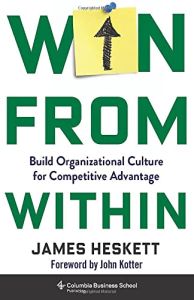
Win from Within
Book

Win from Within

Build Organizational Culture for Competitive Advantage

Columbia Business School Publishing, 2022
First Edition: 2022 more...

Buy the book


Editorial Rating

9

getAbstract Rating

  • Applicable
  • Overview
  • Concrete Examples

Recommendation

James Heskett, one of the most eminent business educators of the 20th century, offers a deep dive into how to build a successful organizational culture. Heskett, UPS Foundation Professor Emeritus at Harvard Business School, explains that having a strong culture does not always guarantee marketplace success. He tells you how to build and maintain a winning culture while avoiding the pitfalls of a culture that is strong but also toxic. Heskett maintains that leaders can shift a company’s culture in a matter of months. To that end, he offers many research-based examples that will be highly useful to everyone involved in managing organizations.

Summary

Evidence does not support most of the common wisdom about organizational culture.

A strong culture isn’t necessarily a winning asset. Companies with strong cultures can be winners or losers, depending on the nature of their culture and the context it creates for corporate strategy.Forward-looking leaders find culture and strategy complementary. For example, Microsoft CEO Satya Nadella simultaneously healed its dysfunctional culture and led a major strategic shift from Windows to cloud computing. He demonstrated that the right leader can change a company’s culture in months.

The leaders of companies that falter mistakenly often assume that what worked in the past will continue to work. Their leaders resist new ideas.

An effective culture boosts the bottom line, and fosters flexibility, innovation, and learning.

The competitive advantage of an effective culture can outlive that of any strategy. Working only from cultural information, analysts can predict a company’s relative profitability. Using internal and external data, they can estimate how culture affects profit and use ...

About the Author

James Heskett is the UPS Foundation Professor Emeritus at Harvard Business School, where he previously served as faculty chair of the MBA program.



Comment on this summary

  • Avatar
  • Avatar
    L. A. 1 year ago
    Tener un conocimiento de nuestra compañía, nos permite la cultura corporativa no solo establece la identidad y el clima laboral de una compañía, sino que también define el tipo de vínculo que mantiene con sus trabajadores y sus consumidores. Y, como puedes suponer, estas relaciones pueden generar un significativo efecto en el desarrollo de la empresa.

    Si una compañía mantiene una cultura empresarial fundamentada en la confianza y el respeto recíproco, promoverá la fidelidad y el contento de su personal. Cuando un trabajador se siente apreciado, incrementa su dedicación a su labor y potencia sus esfuerzos para lograr las metas de la compañía.
    Esto resulta en un incremento de la productividad y eficiencia que favorece directamente el desarrollo de la empresa.
    En esta situación, los colaboradores se empeñarán en brindar un servicio superior a sus clientes y, en consecuencia, las adquisiciones se tornarán más habituales. Además, estos clientes, contentos con la atención recibida, pueden sugerir la compañía a otros clientes y transformarse en portavoces de la marca.
    Así pues, esta clase de cultura organizacional fomenta el desarrollo del negocio mediante la conservación de los clientes actuales y la adquisición de nuevos clientes.
    No obstante, una cultura organizacional perjudicial o descoordinada con las metas de la compañía puede provocar el efecto opuesto.
  • Avatar
    Z. X. 2 years ago
    Culture is the soul of company.
  • Avatar
    A. N. 2 years ago
    Gives leaders a lot to think about, appreciate the helpful tips at the end.

More on this topic

Related Skills

Be Creative
Be Emotionally Intelligent
Become More Adaptable
Develop Innovative Products
Develop the Organization
Digital Transformation
Finance Industry
Public Sector
Future of Work
Drive Team Performance
Enable Digital Organization
Entrepreneurship
Execute Digital Operations
Foster a Culture of Innovation
Human Resources
Innovate Strategically
Lead Ethically
Lead Strategically
Lead Yourself
Leadership
Live Well
Manage Learning and Development
Manage Performance
Management
Market Insights by Industry
Master Collaboration
Master Interpersonal Skills
Navigate Leadership Challenges
Personal Growth
Promote Diversity, Equity, and Inclusion
Soft Skills
Strengthen Your Digital Literacy
Understand Innovation
Understand Organizations
Workplace Skills
Conduct Employee Surveys
Discover Innovation Case Studies
Find Meaning
Leverage Ambidexterity
Navigate Workplace Culture
Promote Customer Centricity
Retain Employees
Promote a Learning Culture
Support Employees’ Well-being
Foster Team Culture
Foster Ownership in Others
Leverage Employee Resource Groups
Public Sector Best Practices
Executive Leadership
Practice Gratitude
Discover Cultural Trends
Drive Continuous Improvement
Manage Employee Relations
Innovation
Understand Human Behavior
Finance Industry Best Practices
Promote Failure-tolerance
Build Digital Culture
Understand Motivation
Reward Employee Contributions
Practice Humility
Increase Your Cultural Awareness
Understand Organizational Culture
Cultivate a Growth Mindset
Enhance Employee Experience
Manage People and Talent
Shape Organizational Culture
Motivate Your Team
Collaborate Virtually
Drive Employee Engagement
Apply Lean Startup
Build Psychological Safety
Lead Remote or Hybrid Teams
Practice Servant Leadership
New Work Models
Offer Flexible Work Arrangements
Encourage Experimentation
Work Remotely