Skip navigation
You Said What?!
Book

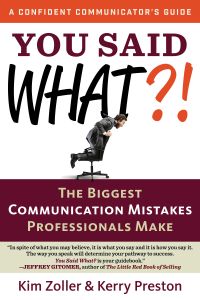
You Said What?!

The Biggest Communication Mistakes Professionals Make (A Confident Communicator’s Guide)

Career Press, 2015 more...

Buy the book


Editorial Rating

8

getAbstract Rating

  • Innovative
  • Applicable

Recommendation

Many professionals make common communication mistakes that detract from their image and hamper the clear delivery of their intended message. Ordinary pitfalls, such as interrupting, reacting without planning what to say or not being aware of your image, may be holding you back professionally. Communications experts Kim Zoller and Kerry Preston identify the 16 worst communication blunders, tell you how to correct or avoid them, answer recurring questions, and offer goal-planning strategies you can incorporate into your daily schedule. Though some of the advice is familiar, Zoller and Preston’s smart and attractive compilation offers precision, brevity and concision. getAbstract recommends their highly useful manual as a ready-reference guidebook for business newcomers and as a welcome reminder for seasoned professionals.

Summary

“Communicate Your Message”

Communication gaps – the spaces between what you think you said and what the recipient actually heard – happen constantly. If your words and actions fail to convey your intended message, take that mistake as a warning. Realize that the true expression of your message depends not only on what you say, but also on how you say it and how you present yourself. You will know you are communicating effectively when the other person hears exactly what you mean. Try to avoid these 16 common, big communication mistakes and, if you stumble, here’s how to correct them:

Mistake 1: “Not Being on Your A-Game”

Being your best possible self requires a positive mind-set and a can-do attitude. When things outside your control go wrong, regulate your response. Getting angry in traffic or yelling at a flight attendant never improves anything. Take a breath when something goes awry, work calmly toward a solution and offer to help. Don’t cast blame. Understand other people’s viewpoints and listen to what they say. Plan worst-case scenarios, so events don’t catch you off guard.

Mistake 2: “Not Beginning with the End in Mind”

When someone says...

About the Authors

Kim Zoller and Kerry Preston, co-leaders of the Image Dynamics protocol and leadership consultancy, are frequent public speakers.


Comment on this summary

  • Avatar
  • Avatar
    C. H. 1 year ago
    This is really good information
  • Avatar
    T. B. 8 years ago
    This is really good information
  • Avatar
    O. L. 10 years ago
    Great info & tips here!!!

More on this topic

Related Skills

AI Transformation
Be Creative
Become a Self-Driven Learner
Become More Adaptable
Become More Productive
Build and Maintain Well-Being
Career
Convert Prospects
Develop Team Members
Develop Your Thinking Skills
Drive Team Performance
Foster a Culture of Innovation
Foster Team Culture
Generate and Qualify Leads
Human Resources
Increase Your Cultural Awareness
Innovation
Leadership
Leverage AI for Leadership
Leverage AI in Your Daily Tasks
Live Well
Manage Corporate Communications
Manage Performance
Manage Teams and Departments
Management
Marketing
Master Collaboration
Optimize Workforce Performance
Plan and Strategize Your Sales
Promote Diversity, Equity, and Inclusion
Sales
Search for a Job
Shape Organizational Culture
Strengthen Team Collaboration
Workplace Skills
Soft Skills
Develop Corporate Messaging
Embrace Challenges
Manage Your Time
Ask Questions
Manage Stress
Personal Growth
Set Boundaries
Understand Emotions
Use AI for Writing & Communication
Build Confidence
Cultivate a Growth Mindset
Listen Well
Foster Open Communication
Influence Others
Improve Your Mental Health
Live Intentionally
Manage Sales Teams
Master Business Writing
Manage Your Emotions
Navigate Difficult Conversations
Overcome Challenges
Practice Humility
Show Empathy and Compassion
Communicate Strategically
Delegate Effectively
Find Your Purpose
Navigate Workplace Culture
Set and Achieve Goals
Develop Self-Mastery
Understand Yourself
Navigate Office Politics
Become a Mentee
Communicate Inclusively
Deal with Difficult People
Facilitate Discussions
Cultivate Self-Discipline
Adopt a Learning Habit
Use AI to Enhance Communication
Address Microaggressions
Support Others
Adapt Communication Style
Build Prospect Rapport
Communicate Across Cultures
Lead Yourself
Build Psychological Safety
Develop Self-Awareness
Understand Personality Types
Embrace Intelligent Failure
Present in Person
Promote Failure-tolerance
Understand Microaggressions
Have Effective Meetings
Take Personal Accountability
Advance Your Career
Dare to be Vulnerable
Excel at Cold Calling
Challenge Assumptions
Improve Team Performance
Persuade Effectively
Build Your Resilience
Recognize Social Cues
Understand Cultural Differences
Manage Internal Communication
Navigate Leadership Challenges
Communicate Clearly
Communicate Digitally
Understand Communication
Network Strategically
Manage Your Leadership Impact
Manage Team Communication
Be Authentic
Gain People's Trust
Mitigate Cognitive Biases
Manage Your Personal Reputation
Master Interpersonal Skills
Communicate Effectively
Excel at Conversations
Be Coachable
Be Emotionally Intelligent
Master Business Etiquette
Think Critically
Conduct Performance Reviews
Communicate Non-Verbally
Learn from Feedback
Develop Your Personal Brand
Build Your Presence
Build Strong Relationships
Provide Feedback