
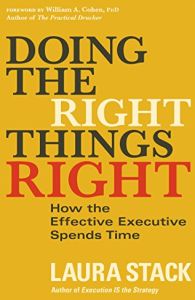
Book
Doing the Right Things Right
How the Effective Executive Spends Time



Haz clic con el botón derecho del ratón para copiar la imagen.
Nota: En un portal ASP, ¡el enlace del código es específico del portal!
Recommendation
In 1967, Peter Drucker, the father of modern management, published The Effective Executive: The Definitive Guide to Getting the Right Things Done. Drucker’s best-selling work, which codified business productivity, remains a revered, popular classic. Some of Drucker’s concepts, however, are more traditional than modern. Productivity consultant Laura Stack takes up where Drucker left off, offering a fresh perspective in her updated supplement to Drucker’s indispensable manual. She presents three “T’s” of leadership – “strategic thinking, team focus and tactical work” – as the organizing rubric for 12 critical management goals. Stack details why and how modern executives must operate in “efficient and effective” ways. getAbstract recommends her update to all executives – a category, she says, that includes anyone who makes important decisions.
Summary
About the Author
Laura Stack founded The Productivity Pro consultancy. Her other books include What To Do When There’s Too Much To Do and Execution Is the Strategy.
By the same author
Learners who read this summary also read
Related Skills

Liderazgo ejecutivo

Lidere estratégicamente

Sea creativo

Construya y mantenga el bienestar

Comuníquese eficazmente

Desarrolle un plan de negocios

Desarrolle sus habilidades de pensamiento

Transformación digital

Habilitar la organización digital

Mejorar la ciberseguridad

Mejore la experiencia de los empleados

Emprendimiento

Ejecutar operaciones digitales

Recursos humanos

Lidere con ética

Lidérese a sí mismo

Liderazgo

Gestione las comunicaciones corporativas

Gestionar el Aprendizaje y Desarrollo

Administración

Mercadotecnia

Domine habilidades interpersonales

Habilidades blandas

Fortalecer la colaboración del equipo

Comuníquese estratégicamente

Demuestre vulnerabilidad

Aproveche la ambidestreza

Practique el liderazgo servicial

Establezca objetivos empresariales

Habilidades para el lugar de trabajo

Cultive la positividad

Mejore su salud mental

Gestione la comunicación del equipo

Promueva la tolerancia al fracaso

Desarrolle la organización

Construir una cultura de seguridad

Construya la cohesión del equipo

Innove estratégicamente

Crecimiento personal

Dé forma a la cultura organizacional

Construir cultura digital

Fomente la experimentación

Sea más productivo

Impulse el compromiso de los empleados

Busque la excelencia

Viva Bien

Mantenga el equilibrio trabajo-vida

Practica el liderazgo transformacional

Comunique la estrategia corporativa

Comprenda la motivación

Innovación

Planifique estratégicamente

Defina los valores fundamentales

Cultive una mentalidad de crecimiento

Cultive la flexibilidad

Impulsar el rendimiento del equipo

Fomente una cultura de innovación

Sea más adaptable

Construya una visión compartida

Construya seguridad psicológica

Establezca y alcance metas

Establezca objetivos de equipo

Motive a su equipo

Comunique el propósito corporativo

Abrace el cambio

Fomentar la cultura del equipo

Administre su tiempo

Piense estratégicamente

Mejore la agilidad del equipo

Agilice su organización

Comment on this summary
The final paragraph from the abstract suggests the author of the abstract is still locked into 20th century culture. Maybe they should read the book! 'Long Hours, High Stress' is a sign of "Doing the Wrong things Wrong".