Ignorer la navigation
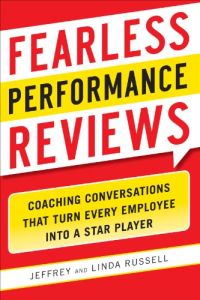
Fearless Performance Reviews
Book

Fearless Performance Reviews

Coaching Conversations that Turn Every Employee into a Star Player

McGraw-Hill, 2013 plus...

Buy the book


Editorial Rating

7

getAbstract Rating

  • Applicable

Recommendation

Performance reviews shape employees’ pay and promotions and affect their sense of self-worth. Managers detest performance reviews and have as much on the line as their staffers due to their overall responsibility for performance. The way most companies structure performance reviews brings out the worst in everybody. The more managers turn into posturing “my-way-or-the-highway” dictators, the more employees become surly, defensive obstructionists who feel threatened by evaluations they reject. Fortunately, you can take a better path to performance reviews by facilitating “performance-coaching conversations,” instead. Organizational experts Jeffrey and Linda Russell explain how to conduct performance reviews that actually improve performance. Their “fearless performance review” construct is a solid contribution to this process, even if some steps still sound a little scary. getAbstract recommends this productive path to those charged with review policy, HR professionals, and all supervisors and managers.

Summary

Reviewing Performance Reviews

Everyone hates performance reviews – the employees who face them and the managers who administer them. The biggest problem is performance reviews’ confrontational structure and judgmental style. Often, these reviews generate stressful conversations that make everyone uncomfortable; they stifle honest and open communication between supervisors and employees.

Because of performance reviews’ negative, pain-inducing structure, managers often delay them as long as possible. And staffers under review often quickly become defensive. They worry about their managers’ judgments and how the review’s findings will affect their status and remuneration.

Performance reviews are a fairly new phenomenon. They became popular during World War II as a result of the pioneering work of Fredrick Taylor, the father of “scientific management.” Taylor believed that employees could not be trusted to take charge of their own work. He told companies that managers should control the planning of all employees’ work activities. Most companies subsequently organized their workflow in adherence with Taylor’s principles. They instituted performance reviews in the...

About the Authors

Jeffrey and Linda Russell are principals of Russell Consulting Inc. and the authors of nine other books, including Leading Change Training and Strategic Planning Training.


Comment on this summary

More on this topic

Related Skills

Sea creativo
Sea emocionalmente inteligente
Sea más adaptable
Sea más productivo
Comuníquese eficazmente
Desarrolle un plan de negocios
Develop Team Members
Emprendimiento
Liderazgo ejecutivo
Fomente una cultura de innovación
Recursos humanos
Innovación
Lidere con ética
Lidere estratégicamente
Viva Bien
Tome buenas decisiones
Gestione el cambio
Manage Learning and Development
Gestione equipos y departamentos
Administración
Optimice el desempeño de la plantilla
Coloque talento estratégicamente
Promueva la diversidad, equidad e inclusión
Dé forma a la cultura organizacional
Fortalezca su alfabetización digital
Habilidades para el lugar de trabajo
Implemente programas de coaching
Mejore la experiencia de los empleados
Evalúe a los empleados
Desafíe las suposiciones
Mejore el desempeño del equipo
Colabore virtualmente
Lidere a través del cambio
Cree sentido de pertenencia
Sobresalga en las conversaciones
Navigate Leadership Challenges
Gestione el impacto de su liderazgo
Crecimiento personal
Trate con personas difíciles
Domine la colaboración
Cultive la positividad
Drive Team Performance
Lidere de forma inclusiva
Comuníquese estratégicamente
Navegue por conversaciones difíciles
Haga mejores preguntas
Motive a su equipo
Adopte el pensamiento divergente
Establezca y alcance metas
Fomente la experimentación
Colabore de forma creativa
Tome decisiones en grupo
Impulse el rendimiento de la organización
Liderazgo
Colabore entre funciones
Muestre empatía y compasión
Promueva la tolerancia al fracaso
Lidérese a sí mismo
Facilite la ideación grupal
Sea auténtico
Foster Team Culture
Establezca objetivos empresariales
Facilite las discusiones
Navegue por la política de la oficina
Compréndase a sí mismo
Ábrase al coaching
Defina los valores fundamentales
Practice Transformational Leadership
Apoye a los demás
Manage People and Talent
Proporcione retroalimentación
Establezca estándares de desempeño
Establezca objetivos de equipo
Habilidades blandas
Comuníquese de forma transparente
Desarrolle la autoconciencia
Gestione el desempeño
Domine habilidades interpersonales
Adopte otras perspectivas
Fomente la comunicación abierta
Practique el liderazgo servicial
Strengthen Team Collaboration
Realice evaluaciones de desempeño
Construya seguridad psicológica
Cultive una mentalidad de crecimiento
Practique la humildad
Demuestre vulnerabilidad