
Saltar la navegación
First Things Fast
Book

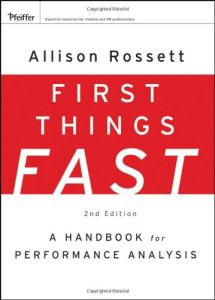
First Things Fast

A Handbook for Performance Analysis

Pfeiffer, 2009 plus...

Buy the book


Editorial Rating

7

getAbstract Rating

  • Applicable

Recommendation

“Performance analysis” (PA) allows companies to determine their needs and assess their accomplishments based on data, not guesses or hunches. Whether you’re looking to improve your employees’ skills, upgrade your company’s support systems or forecast trends, accurate PA is the key to success. Business owners, human resources personnel and learning consultants must know how to execute PA. Clients who need PA usually want its findings quickly. Business moves so fast that any delay in PA risks making its information obsolete. But working quickly need not mean a drop in quality, argues education technologist Allison Rossett. With clear explanations, charts and testimony from “the trenches,” she illuminates the path to accurate, applicable performance analysis. getAbstract believes her insights and advice are a valuable guide for chief learning officers, organizational development staffs, and HR officers or consultants who seek to lift their workforces or clients to the next level – and who prefer to look before they leap.

Summary

To PA or Not to PA

“Performance analysis” (PA) helps you identify and reach your business objectives by measuring your firm’s progress toward its goals based on facts – not intuition or wishful thinking. PA requires human resources teams to work hand in hand with their business colleagues and mandates that consultants work together with their clients.

Effective PA shows your co-workers or customers a future direction based on solid information. The best course forward is most likely to arise from addressing one of these four areas:

  1. “Opportunities” – Can you make the most of a chance to improve? Your company might increase its productivity by teaching employees to use a new technology.
  2. “Problems” – Can you solve a dilemma or fix subpar results in some area of your business, such as sales or customer relations?
  3. “Development of a group of people” – Can you increase your company’s capabilities, perhaps by taking a department or unit up to a new skill level?
  4. “Strategic planning” – Can your leaders redirect the company to respond ...

About the Author

Training and corporate learning expert Allison Rossett serves on the faculty of San Diego State University. She also wrote Beyond the Podium.


Comment on this summary

More on this topic

Related Skills

AI Transformation
Sea emocionalmente inteligente
Conviértase en un aprendiz autodirigido
Sea más productivo
Carrera
Comuníquese eficazmente
Desarrolle sus habilidades de pensamiento
Transformación digital
Drive Team Performance
Enable Digital Organization
Mejore la experiencia de los empleados
Liderazgo ejecutivo
Recursos humanos
Innovación
Lidere estratégicamente
Lidérese a sí mismo
Liderazgo
Leverage AI for HR
Viva Bien
Tome buenas decisiones
Manage Learning and Development
Manage People and Talent
Gestione la innovación de productos
Gestione equipos y departamentos
Administración
Crecimiento personal
Coloque talento estratégicamente
Planee su carrera
Fortalezca su alfabetización digital
Habilidades para el lugar de trabajo
Understand Organizational Behavior
Impulse el desarrollo de productos
Use AI for Learning & Development
Realice evaluaciones de desempeño
Evalúe sus habilidades
Comprenda el comportamiento humano
Develop Team Members
Gestione el impacto de su liderazgo
Presente datos
Recapacite y capacite a los empleados
Comprenda el aprendizaje
Mejore el desempeño del equipo
Identifique las brechas de habilidades
Evalúe a los empleados
Piense analíticamente
Comprenda las organizaciones
Mida el impacto de A+D
Analice datos
Habilidades blandas
Comprenda la motivación
Comprenda las estadísticas
Gestione el talento
Impulse el rendimiento de la organización
Tome decisiones basadas en datos
Gestione el desempeño
Establezca y alcance metas
Optimice el desempeño de la plantilla
Realice encuestas a los empleados