
Saltar la navegación
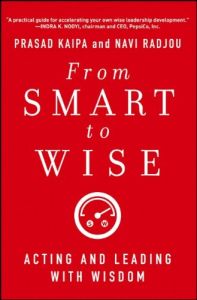
From Smart to Wise
Book

From Smart to Wise

Acting and Leading with Wisdom

Jossey-Bass, 2013 更多详情

Buy the book


Editorial Rating

6

getAbstract Rating

  • Well Structured
  • Concrete Examples
  • For Beginners

Recommendation

Leadership and innovation consultants Prasad Kaipa and Navi Radjou present a method that can add depth and dimension to your leadership capabilities in six areas. They explain the differences between “functional-smart” leaders who operate in the “blue zone” and “business-smart” leaders who operate in the “red zone.” Noting that each type has its strengths and limitations, Kaipa and Radjou explain why neither compares to the wise leader who embodies the best of both, and then some. Their manual includes a self-assessment test, a guided program for embarking on your journey toward wise leadership and examples of leaders who personify wisdom. While noting that many of their concepts are tried-and-true, getAbstract humbly suggests that this concise, highly motivational book might help you find the wisdom you seek.

Summary

It’s Good to Be Wise

Some successful leaders are better at seeing the big picture, while others shine at implementing strategies and still others excel at innovation. Each approach has merit. But merely being smart no longer suffices for the challenges of “complex and uncertain times,” and for achieving the personal and professional satisfaction leaders can and want to derive from their leadership efforts. Moving beyond smartness requires persistent dedication to practicing “wise leadership skills.”

Smart leaders are either:

  1. “Functional smart” – These leaders exhibit expertise in a particular area – such as R&D – and deliberate before acting. Conservative about risk, they limit their activities to “what they know best.”
  2. “Business smart” – These leaders like risk, see the bigger picture, have a competitive streak and take a broader perspective.

Both types of leaders stay within their comfort zones. However, wearing blinders – or viewing the world through a “perceptual filter” – can cost them and their companies. Metaphorically, business-smart leaders wear “red filters” and operate in the “red zone...

About the Authors

CEO adviser Prasad Kaipa is the founding executive director of the Center for Leadership, Innovation and Change at the Indian School of Business. Navi Radjou is a World Economic Forum faculty member and co-author of Jugaad Innovation.


Comment on this summary

More on this topic

Related Skills

Avance en su carrera
AI Transformation
Construya y mantenga el bienestar
Carrera
Desarrolle la organización
Desarrolle sus habilidades de pensamiento
Drive Team Performance
Foster Team Culture
Recursos humanos
Innove estratégicamente
Innovación
Viva Bien
Gestione el cambio
Manage People and Talent
Administración
Domine la colaboración
Crecimiento personal
Strengthen Team Collaboration
Comprenda las organizaciones
Habilidades para el lugar de trabajo
Navegue por la incertidumbre
Practique el liderazgo servicial
Lidere en las crisis
Leverage AI for Leadership
Navigate Leadership Challenges
Tome decisiones en grupo
Domine habilidades interpersonales
Encuentre significado
Lidere con ética
Sea emocionalmente inteligente
Gestione el impacto de su liderazgo
Aproveche la ambidestreza
Sea más adaptable
Piense analíticamente
Comprenda los enfoques de liderazgo
Gestione sus emociones
Desarrolle su resiliencia
Practique la humildad
Demuestre vulnerabilidad
Desarrolle el autodominio
Lidérese a sí mismo
Piensa críticamente
Viva con intención
Avance como mujer líder
Supere desafíos
Desarrolle la autoconciencia
Cultive una mentalidad de crecimiento
Adopte otras perspectivas
Lidere a través del cambio
Practice Transformational Leadership
Habilidades blandas
Desarrolle la determinación
Navegue por la política de la oficina
Compréndase a sí mismo
Muestre empatía y compasión
Liderazgo ejecutivo
Mitigue los sesgos cognitivos
Comprenda la cognición
Domine el razonamiento lógico
Lidere estratégicamente
Liderazgo
Decida bajo incertidumbre
Sea auténtico
Tome decisiones basadas en datos
Tome buenas decisiones