

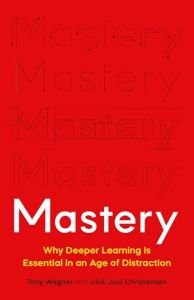
Book
Mastery
Why Deeper Learning Is Essential in an Age of Distraction



Haz clic con el botón derecho del ratón para copiar la imagen.
Nota: En un portal ASP, ¡el enlace del código es específico del portal!
Recommendation
Rote learning and compliance-based schooling no longer align with a world that prizes adaptability, creativity, and skill. Education expert Tony Wagner and learning technologist Ulrik Juul Christensen propose a radical overhaul of the American educational system toward mastery learning, an approach that empowers learners, fosters foundational competencies, and emphasizes deliberate practice guided by meaningful feedback. In clear, information-packed prose, the authors build a compelling case for reimagining education from the ground up.
Summary
About the Authors
Tony Wagner is a senior research fellow at the Learning Policy Institute and the author of Creating Innovators and The Global Achievement Gap. Ulrik Juul Christensen is founder and CEO of Area9 Lyceum, a personalized and adaptive learning company.
Related Skills

Transformación de IA

Conviértase en un aprendiz autodirigido

Sea más adaptable

Recursos humanos

Aprovecha la IA en tus tareas diarias

Gestionar el Aprendizaje y Desarrollo

Crecimiento personal

Habilidades para el lugar de trabajo

Utiliza la IA para el aprendizaje y la mejora de habilidades

Adopte un hábito de aprendizaje

Cultive una mentalidad de crecimiento

Cultive el aprendizaje continuo

Promueva una cultura de aprendizaje

Comment on this summary