Saltar la navegación
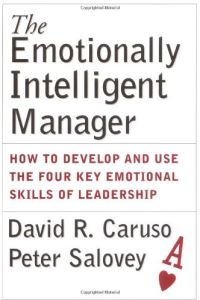
The Emotionally Intelligent Manager
Book

The Emotionally Intelligent Manager

How to Develop and Use the Four Key Emotional Skills of Leadership

Jossey-Bass, 2004 más...

Buy the book


Editorial Rating

9

getAbstract Rating

  • Innovative
  • Applicable

Recommendation

It’s rare for a business book to offer first-hand, practical advice from a thinker who has revolutionized academic thought in his field. Here, that thinker is co-author Peter Salovey, the pioneer who invented the concept of emotional intelligence. Salovey provides a practical, application-oriented guide. With co-author David R. Caruso, he shows you how to take the idea of emotional intelligence - that emotional well-being and wholeness are at least as essential as intellectual capacity - and use it to do something truly relevant: create emotionally intelligent managers. The authors thoughtfully steer away from the superficial, self-help genre pitfall that purports to offer an easy one-book panacea. Instead, they offer a series of case studies and interactive exercises that may help even the most hard-hearted executive become less emotionally challenged. getAbstract gives this book its highest recommendation; it’s a gift to those toiling in the emotionally barren modern workplace.

Summary

Emotions at Work

The common view of emotions in the workplace is negative. "Don’t get so worked up," people will advise you. Or they may say, "You need to keep a cool head" or even, "Let’s not let our emotions carry us away here. We need to think rationally."

All of this is bad advice. These statements actually reflect a common, misguided notion of what emotions really are. It’s the idea that emotions are remnants from millions of years of evolution, and that a more "perfect" person would necessarily be more rational and, thus, less emotional. Emotions, then, are about as useful as your appendix, and to the extent they can be removed from your behavior, you’re likely to be better off without them.

The problem with this view is that it is patently, scientifically false. In fact, work conducted by University of Iowa neuroscientist Antonio Damasio shows that emotions are integral to the human thought process, rather than a secondary legacy. Indeed, as human brains have grown more complex through millions of years of evolution, the wiring for emotion remains. Emotion cannot be surgically removed from intelligence. The time has come for managers, instead, to say things...

About the Authors

Peter Salovey, dean of Yale University’s Graduate School of Arts and Sciences, is the Chris Argyris Professor of Psychology at Yale and president of the Society for General Psychology. A leading authority on the psychological consequences of emotion, he was founding editor of the Review of General Psychology. David R. Caruso is a management psychologist and research affiliate in the Department of Psychology at Yale. He is a consultant and seminar leader who specializes in executive coaching, career assessment and leadership development.



Comment on this summary

  • Avatar
  • Avatar
    L. C. 2 years ago
    Emotional intelligence! what a gift! fully recommend this listening; helps you to understand the principles behind and some examples that can guide you.
  • Avatar
    K. K. 3 years ago
    Emotionally Intelligent managers build strong teams, plan & decide efficiently, motivate others well,communicate vision,promote positive change,create productive & interpersonal relationship.
  • Avatar
    M. H. 4 years ago
    An important summary about emotional intelligence which is the pillar of leadership! Thanks a lot!

More on this topic

Related Skills

AI Transformation
Construya y mantenga el bienestar
Comuníquese eficazmente
Desarrolle sus habilidades de pensamiento
Drive Team Performance
Mejore la experiencia de los empleados
Fomente una cultura de innovación
Foster Team Culture
Recursos humanos
Innovación
Lidere con ética
Viva Bien
Manage Learning and Development
Gestione el desempeño
Administración
Domine la colaboración
Navigate Leadership Challenges
Crecimiento personal
Planifique y elabore estrategias para sus ventas
Promueva la diversidad, equidad e inclusión
Ventas
Habilidades para el lugar de trabajo
Comprenda la cognición
Lidérese a sí mismo
Construya la cohesión del equipo
Habilidades blandas
Liderazgo ejecutivo
Comprenda las organizaciones
Navegue por la política de la oficina
Comprenda el comportamiento social
Reconozca señales sociales
Comprenda la comunicación
Aproveche los grupos de recursos de los empleados
Gestionar equipos de ventas
Construya seguridad psicológica
Comuníquese de forma no verbal
Liderazgo
Understand Organizational Behavior
Comprenda la motivación
Gestione el impacto de su liderazgo
Motive a su equipo
Practice Transformational Leadership
Comprenda los tipos de personalidad
Gestione las relaciones con los empleados
Resuelva conflictos
Comprenda el comportamiento humano
Compréndase a sí mismo
Navegue por conversaciones difíciles
Practique el liderazgo servicial
Leverage AI for Management
Controle el estrés
Demuestre vulnerabilidad
Desarrolle la autoconciencia
Manage People and Talent
Domine habilidades interpersonales
Muestre empatía y compasión
Trate con personas difíciles
Gestione sus emociones
Comprenda las emociones
Sea emocionalmente inteligente