


Saltar la navegación
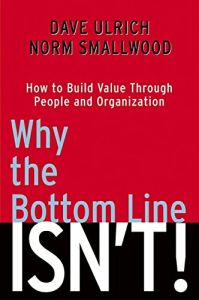
Why the Bottom Line Isn't!
Book

Why the Bottom Line Isn't!

How to Build Value Through People and Organizations

Wiley, 2003 más...

Buy the book


Editorial Rating

6

Recommendation

Authors Dave Ulrich and Norm Smallwood use a bottom-line approach to assess various business intangibles that build actual value, such as a vision of future growth and improved capabilities. They present the keys to creating value by mustering intangible assets in a well-organized, highly structured way. Unfortunately, the intangible factors and the growth steps they discuss are well-traveled territory. But while other books may describe how to develop these "soft" qualities in a more intriguing or more original way, this volume handily dissects, quantifies and explains them step by step. Here, the vague is made concrete. Even a bean counter could understand the bottom line value of innovation, improved internal systems and enhanced organizational culture with this explanation. getAbstract.com recommends it to those who want to invest in intangible assets in a tangible setting, for very tangible reasons.

Summary

A Hard Line Approach to the Soft Stuff

To create increased market value, consider the "soft stuff" as important as the "hard stuff," because it increases your customers’, investors’ and employees’ confidence about the future. This value is based on the quality of your people and your organization - not just your products and physical assets. Such intangibles increase a firm’s market value. This increase is not tied only to profits, since firms in the same industry with the same profits can have very different values in the marketplace. The foundation of value may be positive financial performance, but intangible qualities increase that value. These intangibles represent the "value of a company not accounted for by current earnings."

Which Intangibles Build Value?

Baruch Lev, a New York University accounting professor, identified three major types of intangibles. Discovery intangibles are patents, trademarks and research and development. Organizational intangibles involve technology and systems. Human resource intangibles involve organizational culture as well as training and leading people. Other measures that matter most to investors, according to Ernst &...

About the Authors

David Ulrich, Ph.D., has co-authored ten books and more than 100 articles on management and has consulted with more than half of the Fortune 200 companies. He is on leave as a professor at the University of Michigan to serve as Mission President for the Church of Jesus Christ of Latter-Day Saints in Montreal. Norm Smallwood is cofounder of Results-Based Leadership and the co-author, with Ulrich, of Results-Based Leadership: How Leaders Build the Business and Improve the Bottom Line. He provides consulting services based on that book and this one.


Comment on this summary

More on this topic

Related Skills

Sea más productivo
Genere confianza
Construya su startup
Comuníquese eficazmente
Desarrolle un plan de negocios
Desarrolle productos innovadores
Transformación digital
Enable Digital Organization
Emprendimiento
Execute Digital Operations
Fomente una cultura de innovación
Recursos humanos
Innovación
Lidere la planificación operativa
Lidere estratégicamente
Administre el capital
Gestione equipos y departamentos
Crecimiento personal
Promueva la diversidad, equidad e inclusión
Habilidades blandas
Habilidades para el lugar de trabajo
Strengthen Team Collaboration
Finanzas Corporativas
Gestione el impacto de su liderazgo
Coloque talento estratégicamente
Planifique estratégicamente
Foster Team Culture
Comuníquese estratégicamente
Garantice liquidez
Practice Transformational Leadership
Optimice su flujo de trabajo
Fomente la comunicación abierta
Convierta la estrategia en acción
Dé forma a la cultura organizacional
Innove estratégicamente
Build Digital Culture
Mejore la experiencia de los empleados
Aproveche los grupos de recursos de los empleados
Lidérese a sí mismo
Administración
Coachee personas
Defina la visión del producto
Develop Team Members
Liderazgo
Agilice su organización
Drive Team Performance
Manage People and Talent
Defina propósito, visión y misión
Desarrolle la organización
Planifique estrategias para el crecimiento
Aproveche sus fortalezas
Liderazgo ejecutivo
Construya una visión compartida
Impulse el rendimiento de la organización
Gestione capital intelectual