

Book
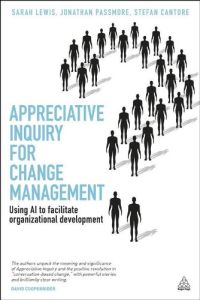
Appreciative Inquiry for Change Management
Using AI to Facilitate Organizational Development



Disponibilité du résumé : mondiale
Haz clic con el botón derecho del ratón para copiar la imagen.
Nota: En un portal ASP, ¡el enlace del código es específico del portal!
Recommendation
As anyone who has worked in a large enterprise knows, organizations often fail to acknowledge and leverage the human side in their change initiatives, and they struggle mightily as a result. Psychologists Sarah Lewis and Jonathan Passmore, and consultant Stefan Cantore offer an overview of a variety of conversation-based change management methods in use today, with a particular focus on “Appreciative Inquiry” (AI). Because people create and exist in organizations, these collectives suffer the same conflict, chaos and endless complexity that human beings do, so it makes sense to bring human sensibilities into the business world. Though AI may strike some as pop psychology, this manual shows how it’s already at work in major businesses worldwide and how it can help your organization. getAbstract recommends it to any leader, manager, coach or consultant interested in alternative approaches to change management.
Summary
About the Authors
Sarah Lewis and Jonathan Passmore are occupational psychologists and consultants. Stefan Cantore is a consultant in leadership and organizational development.
By the same authors
Learners who read this summary also read
Related Skills

Communiquer efficacement

Finances d'entreprise

Ressources Humaines

Leadership

Tirez parti de l'IA pour l'expérience client

Exploiter l'IA pour le marketing

Bien vivre

Management

Marketing

Développer ses compétences interpersonnelles

Développement personnel

Promouvoir la diversité, l'équité et l'inclusion

Compétences relationnelles

Renforcer la collaboration d'équipe

Compétences professionnelles

Découvrez les cas d'utilisation de l'IA

Exercer une influence

Utilisez l'IA pour la planification des effectifs

Tirez parti de l'IA pour la finance

Tirer parti de l'IA pour le leadership

Gérer les conversations difficiles

Utilisez l'IA pour améliorer la communication

Découvrez les cas d'utilisation de l'IA dans l'industrie automobile

Découvrez les cas d'utilisation de l'IA dans l'industrie des télécommunications

Tirez parti de l'IA pour les RH

Tirez parti de l'IA dans vos tâches quotidiennes

Utilisez l'IA pour l'automatisation du service client

Découvrez les cas d'utilisation de l'IA dans l'industrie du conseil

Faciliter les discussions

Découvrez les cas d'utilisation de l'IA dans l'industrie manufacturière

Utilisez l'IA pour l'optimisation des processus

Exceller dans l'art de la conversation

Tirez parti de l'IA pour la gestion

Transformation par l'IA

Pratiquer la gratitude

Comment on this summary