Ignorer la navigation
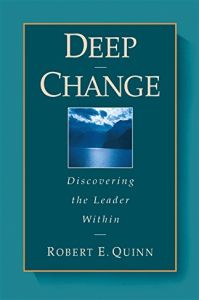
Deep Change
Book

Deep Change

Discovering the Leader Within

Jossey-Bass, 1996
First Edition: 1996 plus...

Buy the book


Editorial Rating

8

getAbstract Rating

  • Applicable

Recommendation

This book is for readers who are ready to look inside themselves in order to change their organizations. It isn’t a book for novices. You need a fair amount of business experience to have the perspective to understand author Robert E. Quinn’s message. Likewise, you need to have enough invested in your current organization to care if it changes. Quinn offers some theoretical analysis, but leavens it with ample practical examples and exercises. If you have a job, rather than a career, or if you are committed to staying in a narrow, technical field or just waiting for your retirement, skip this book. However, if you’re willing to engage in extended self-examination, getAbstract.com suggests this to you. However, be warned that that many of Quinn’s drills are emotionally challenging, such as identifying how you resist change or pegging which elements of your organization are more committed to the status quo than to success. But, then, whoever said change was easy?

Summary

What Is "Deep Change" and Why Does It Matter?

When most people talk about the need to change, they’re talking about little "incremental" changes - details they can alter over time. Incremental change isn’t threatening, but it is not powerful enough to address the forces at work in today’s world. Incremental change is appealing because, "during incremental change, we feel we are in control," however, eventually, the need for "deep change" will confront you. It requires re-examining and altering the fundamental ways that you approach your work and the world; it entails redefining yourself and the paradigms you use to operate.

The process will be uncomfortable, for you and everyone in your organization (defined as an organized system with regular, proven patterns of actions), but the nature of the world and of business organizations makes it necessary. Your sense of who you are is based on what you’ve done before and on your place in your organization Such borders shape your identity, so why do you have to change them?

If you want to retain vitality, you have to plunge into the terrifying process of personal and professional self-examination and change - not because...

About the Author

Robert E. Quinn has worked with executives managing organizational change for more than 20 years. The author of several books, Quinn is a professor of business administration at the University of Michigan and a member of the World Business Academy.


Comment on this summary

More on this topic

Related Skills

Faire progresser sa carrière
AI Transformation
Développer sa créativité
Carrière
Communiquer efficacement
Rédiger un business plan
Concevoir des produits innovants
Développer son organisation
Transformation numérique
Enable Digital Organization
Création d’entreprise
Execute Digital Operations
Ressources Humaines
Diriger de façon éthique
Diriger la planification opérationnelle
Gérer des équipes et des départements
Management
Développer ses compétences interpersonnelles
Développement personnel
Planifier stratégiquement
Promouvoir la diversité, l'équité et l'inclusion
Compétences relationnelles
Comprendre l'innovation
Comprendre les organisations
Compétences professionnelles
Se lancer dans l'intrapreneuriat
Faciliter les discussions
Build Digital Culture
Savoir collaborer
Promouvoir la créativité
Créer un sentiment d'appartenance
Promouvoir une communication ouverte
Définir l'objectif, la vision et la mission
Motiver son équipe
Diriger de façon inclusive
Pratiquer le Servant Leadership
Faciliter le brainstorming de groupe
Gérer l'impact de son leadership
Façonner la culture d'entreprise
Communiquer stratégiquement
Encourager l'amélioration continue
Utiliser le Design Thinking
Navigate Leadership Challenges
Drive AI Transformation
Transformer la stratégie en action
Renforcer la sécurité psychologique
Manage People and Talent
Collaborer avec créativité
Oser se montrer vulnérable
Promouvoir la collaboration
Encourager l'appropriation chez les autres
Comprendre le changement organisationnel
S’auto-diriger
Se comprendre soi-même
S’adapter à la politique de l’entreprise
Renforcer la cohésion de l'équipe
Impulser le changement en douceur
Innovation
Comprendre les approches de leadership
Gérer le changement
Strengthen Team Collaboration
Études de cas sur la direction exécutive
Promouvoir une culture de l'innovation
Encourager l'expérimentation
Remettre en question les hypothèses
Foster Team Culture
Conduire le changement
Drive Team Performance
Practice Transformational Leadership
Leadership
Construire une vision commune
Direction exécutive