
Ignorer la navigation
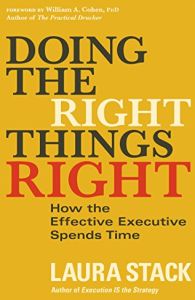
Doing the Right Things Right
Book

Doing the Right Things Right

How the Effective Executive Spends Time

Berrett-Koehler, 2016 plus...

Buy the book


Editorial Rating

9

getAbstract Rating

  • Applicable
  • Well Structured
  • For Beginners

Recommendation

In 1967, Peter Drucker, the father of modern management, published The Effective Executive: The Definitive Guide to Getting the Right Things Done. Drucker’s best-selling work, which codified business productivity, remains a revered, popular classic. Some of Drucker’s concepts, however, are more traditional than modern. Productivity consultant Laura Stack takes up where Drucker left off, offering a fresh perspective in her updated supplement to Drucker’s indispensable manual. She presents three “T’s” of leadership – “strategic thinking, team focus and tactical work” – as the organizing rubric for 12 critical management goals. Stack details why and how modern executives must operate in “efficient and effective” ways. getAbstract recommends her update to all executives – a category, she says, that includes anyone who makes important decisions.

Summary

“Efficient and Effective”

Today’s executives must operate effectively to achieve results and must use resources efficiently in reaching their goals. To attain these standards, executives should follow the credo: “Once you know you’re spending time on the right things…focus on doing them right.”

In his classic book The Effective Executive, Peter Drucker (1909-2005) listed necessary “habits of the mind” – or “effectiveness practices.” He advised knowing how to spend your time and controlling how you spend it, concentrating on results, leveraging your strengths, prioritizing work-related tasks and making results-oriented decisions.

To become and remain effective and efficient, executives should make 12 vital practices the core of their management approach. These 12 practices are organized according to the “3T leadership roles” of “strategic thinking, team focus” and “tactical work.”

Part I: Strategic Thinking

Strategic thinking calls for identifying your intended outcomes and planning your activities around achieving those goals. Take advantage of your organization’s structure while striving to improve it.

Strategic thinking...

About the Author

Laura Stack founded The Productivity Pro consultancy. Her other books include What To Do When There’s Too Much To Do and Execution Is the Strategy.


Comment on this summary

  • Avatar
  • Avatar
    S. Q. 1 year ago
    excellent
  • Avatar
    R. B. 1 year ago
    Excellent summary
  • Avatar
    D. P. 9 years ago


    The final paragraph from the abstract suggests the author of the abstract is still locked into 20th century culture. Maybe they should read the book! 'Long Hours, High Stress' is a sign of "Doing the Wrong things Wrong".

More on this topic

Related Skills

Direction exécutive
Diriger stratégiquement
Développer sa créativité
Construire et entretenir le bien-être
Communiquer efficacement
Rédiger un business plan

Développer sa capacité de réflexion
Transformation numérique
Activer l'organisation numérique
Améliorer la cybersécurité
Améliorer l'expérience de ses employés
Création d’entreprise
Exécuter les opérations numériques
Ressources Humaines
Diriger de façon éthique
S’auto-diriger
Leadership
Gérer la communication de l'entreprise
Gérer l'apprentissage et le développement
Management
Marketing
Développer ses compétences interpersonnelles
Compétences relationnelles
Renforcer la collaboration d'équipe
Communiquer stratégiquement
Oser se montrer vulnérable
Pratiquer le Servant Leadership
Miser sur l'ambidextrie organisationnelle
Définir les objectifs commerciaux
Compétences professionnelles
Améliorer sa santé mentale
Cultiver la positivité
Gérer la communication au sein de l'équipe
Renforcer la cohésion de l'équipe
Développer son organisation
Développer la tolérance à l'échec
Favoriser la culture d'équipe
Construire une culture de sécurité
Innover stratégiquement
Stimuler la performance de l'équipe
Façonner la culture d'entreprise
Développement personnel
Construire une culture numérique
Encourager l'expérimentation
Devenir plus productif
Communiquer sur la stratégie d'entreprise
Pratiquez le leadership transformationnel
Susciter l'engagement des employés
Promouvoir une culture de l'innovation
Rechercher l'excellence
Concilier vie professionnelle et vie privée
Bien vivre
Motiver son équipe
Comprendre la motivation
Innovation
Planifier stratégiquement
Promouvoir une communication ouverte
Cultiver la flexibilité
Développer un état d'esprit de croissance
Construire une vision commune
Apprendre à s'adapter
Renforcer la sécurité psychologique
Se fixer des objectifs et les atteindre
Fixer des objectifs d'équipe
Communiquer l'objectif de l'entreprise
S'adapter au changement
Gérer son temps
Réfléchir de manière stratégique
Améliorer l'agilité de l'équipe
Mettre en place la méthode agile