

Article
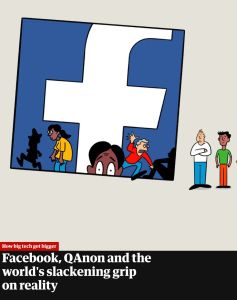
Facebook, QAnon and the World’s Slackening Grip on Reality
How Big Tech Got Bigger
The Guardian,
2020



Cliquez sur le code avec le bouton droit de la souris pour copier l'image.
Remarque : Sur un portail ASP, le lien mentionné à côté du code est spécifique au portail !
Recommendation
People coped with the coronavirus pandemic lockdowns in different ways, but just about everyone spent more time online. Some played video games, but with the help of social media, others got sucked into QAnon’s alternate reality of fear, paranoia and conspiracy. Though Facebook has tried to limit the spread of toxic disinformation, once people are in QAnon’s alternative reality, leaving is hard. The best way to get out of QAnon’s ”rabbit hole” and stay out is for other people to snap you back into the real world. Alex Hern’s article in The Guardian provides much-needed insight into how otherwise sane people can get drawn into conspiracies that are by turns deranged and dangerous.
Summary
About the Author
Alex Hern is the UK technology editor for The Guardian.

Comment on this summary