
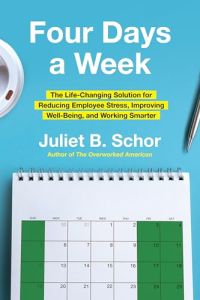
A review of
Four Days a Week
The Life-Changing Solution for Reducing Employee Stress, Improving Well-Being, and Working Smarter
Juliet B. Schor
•
HarperBusiness
•
2025
The review below was first published in the getAbstract Journal on 23 févr. 2026.
We’ve reviewed this title for you as we currently cannot offer a summary. We hope this expert review provides valuable insights in the meantime.
We’ve reviewed this title for you as we currently cannot offer a summary. We hope this expert review provides valuable insights in the meantime.



Cliquez sur le code avec le bouton droit de la souris pour copier l'image.
Remarque : Sur un portail ASP, le lien mentionné à côté du code est spécifique au portail !
Work Fewer Days
by David Meyer
In this data-driven study, economist and Boston College sociology professor Juliet Schor reveals how a four-day workweek helps companies reduce burnout, improve employee retention, and maintain productivity.

Comment on this review