
A review of
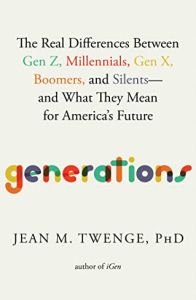
Generations
The Real Differences Between Gen Z, Millennials, Gen X, Boomers, and Silents―and What They Mean for America’s Future
Jean M. Twenge PhD
•
Atria Books
•
2023
The review below was first published in the getAbstract Journal on 12 mai 2025.
We’ve reviewed this title for you as we currently cannot offer a summary. We hope this expert review provides valuable insights in the meantime.
We’ve reviewed this title for you as we currently cannot offer a summary. We hope this expert review provides valuable insights in the meantime.



Cliquez sur le code avec le bouton droit de la souris pour copier l'image.
Remarque : Sur un portail ASP, le lien mentionné à côté du code est spécifique au portail !
Different Strokes
by David Meyer
Psychology professor Jean Twenge applies prodigious research to exploring the differences between generations.

Comment on this review