跳过导航
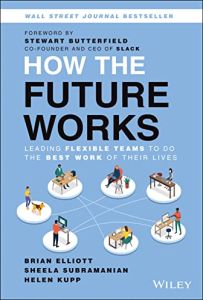
How the Future Works
Book

How the Future Works

Leading Flexible Teams To Do The Best Work of Their Lives

Wiley, 2022 更多详情

Buy the book


Editorial Rating

9

getAbstract Rating

  • Well Structured
  • Visionary
  • Concrete Examples

Recommendation

The COVID pandemic’s lockdowns compromised companies globally. The world of business had to continue, so people began to work from home and set their own schedules. Employees loved these new arrangements. Remote work became many people’s preference, and teams began to function as remote or hybrid collectives. An ad hoc solution that began as a response to an emergency is now how business gets done. Brian Elliott, Sheela Subramanian and Helen Kupp explore how companies can manage this new world of work with flexibility and effectiveness. They advocate continuing collaboration between employers and employees post pandemic, and show how flexible teamwork can prevail.

Summary

Traditional office work is obsolete.

Flexible work arrangements allowing employees to work remotely with independent schedules were once a privilege only for top performers – if even for them.Most organizations wanted employees to work in local offices and follow rigid schedules. That’s how things had always been. 

Management thinkers believed office work fostered collaboration and enabled employees to benefit from each other’s knowledge and experience. Wouldn’t productivity, innovation and profits suffer if employees didn’t work together? How could managers supervise workers who didn’t share the same office?

Then, in 2019, COVID-19 changed everything. It quickly shut down offices and millions of employees began to work from home. Did productivity suffer? In fact, the new flexible work model increased productivity. Creativity and innovation flourished

Today, many employees love the independence of working from home. Recruiting has never been easier. For organizations, this means accepting significant change – and it remains unlikely work will ever entirely return to its...

About the Authors

Brian Elliott is a senior vice president at Future Forum, a Slack consortium.  Sheela Subramanian is a VP at Future Forum, where Helen Kupp is senior director of product strategy and partnerships.  


Comment on this summary

More on this topic

Related Skills

Développer sa créativité
Développer son organisation
Transformation numérique
Avenir du travail
Execute Digital Operations
Direction exécutive
Ressources Humaines
Innover stratégiquement
Innovation
Diriger de façon éthique
Leadership
Manage Learning and Development
Manage People and Talent
Management
Savoir collaborer
Développer ses compétences interpersonnelles
Navigate Leadership Challenges
Développement personnel
Compétences relationnelles
Comprendre l'innovation
Comprendre les organisations
Compétences professionnelles
S’auto-diriger
Développer un état d'esprit de croissance
Promouvoir une communication ouverte
Encourager l'expérimentation
Aménager l'espace de travail
Promouvoir l'inclusion des personnes handicapées
Drive Team Performance
Façonner la culture d'entreprise
Foster Team Culture
Optimiser les performances des effectifs
Comprendre le changement organisationnel
Bien vivre
Strengthen Team Collaboration
Créer un sentiment d'appartenance
Surmonter les difficultés
Construire et entretenir le bien-être
Promouvoir une culture de l'apprentissage
Gérer le changement
Diriger des équipes distantes ou hybrides
Promouvoir la collaboration
Tirer parti des Groupes de Ressources pour les Employés
Promouvoir la neuro-inclusion
Oser se montrer vulnérable
Promouvoir une culture de l'innovation
Practice Transformational Leadership
Cultiver la flexibilité
Gérer l'incertitude
Faire preuve d’authenticité
Miser sur l'ambidextrie organisationnelle
Bien vieillir
Se remettre en forme
Conduire le changement
Faciliter le brainstorming de groupe
Promouvoir l'inclusion LGBTQ+
Diriger de façon inclusive
Pratiquer le Servant Leadership
Améliorer l'agilité de l'équipe
Améliorer l'expérience de ses employés
Apprendre à s'adapter
Garantir le bien-être de ses employés
Concilier vie professionnelle et vie privée
Renforcer la sécurité psychologique
Construire une culture inclusive
Mettre en place la méthode agile
Proposer des modalités de travail flexibles
Work Remotely
S'adapter au changement
Nouveaux modèles de travail