
跳过导航
Open to Think
Book

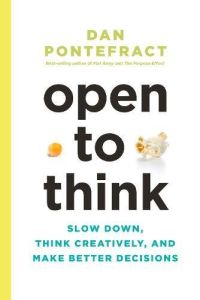
Open to Think

Slow Down, Think Creatively, and Make Better Decisions

Figure 1 Publishing, 2018 更多详情

Buy the book


Editorial Rating

9

getAbstract Rating

  • Applicable
  • Concrete Examples
  • Hot Topic

Recommendation

Citing the title of Robert Frost’s poem “The Road Not Taken” as an example of something people think they know but often get wrong, consultant Dan Pontefract offers a strategy for thinking more clearly and making better decisions. As he explains how his “dream, decide, do” system works, he provides real-life examples of “open thinkers” whose accomplishments stem from their deliberative cognitive practices. People tend to rush to conclusions, accept misinformation, skip nuance or trust shallow assumptions. Instead, Pontefract says, pause to ponder. The effectiveness of your thought process depends on how well you sort evidence, reflect upon it and challenge your conclusions. getAbstract recommends Pontefract’s manual to those who’d like to make better decisions or gain useful insight into their own thought processes.

Summary

Pause to Reflect

Today, people are busier than ever. They have little time to do anything well – including the vital process of thinking things through. For many people, clear thinking is an increasingly rare commodity. People don’t always get around to the necessary steps of thoughtfully weighing their options, building expertise and reaching their own reasoned conclusions to solve problems and make decisions. Some outsource their creative and critical thinking to Alexa, Siri or Wikipedia. Closed thinkers are unwilling to open their minds to new ideas. They seem to think it’s more convenient to go through life shut off from new information and ideas. Too many organizations also function in a close-minded way. 

Many people and companies need to adopt a new thought process to build their decision making skills and agility. This improved system of thought – open thinking – is “a holistic approach of reflection, decision making and action to secure an ethical outcome.” Open thinking calls for careful consideration, for ...

About the Author

Dan Pontefract is the “chief envisioner” at TELUS – a Canadian telecom company – where he heads the Transformation Office, a future-of-work consulting group. He also wrote Flat Army and The Purpose Effect.


Comment on this summary

  • Avatar
  • Avatar
    V. J. 3 months ago
    Thanks useful information; think, have the facts and apply. Do not over think it
  • Avatar
    V. J. 3 months ago
    Thanks useful information; think, have the facts and apply. Do not over think it
  • Avatar
    V. J. 3 months ago
    Thanks useful information; think, have the facts and apply. Do not over think it

More on this topic

Related Skills

Développer son intelligence émotionnelle
Apprendre par soi-même
Devenir plus productif
Communiquer efficacement
Concevoir des produits innovants
Développer son organisation
Transformation numérique
Execute Digital Operations
Foster Team Culture
Ressources Humaines
Innover stratégiquement
Diriger de façon éthique
Bien vivre
Management
Savoir collaborer
Développer ses compétences interpersonnelles
Développement personnel
Strengthen Team Collaboration
Comprendre l'innovation
Comprendre les organisations
Compétences professionnelles
Innovation
Cultiver la flexibilité
Renforcer la sécurité psychologique
Stimuler les performances de l’entreprise
Manage People and Talent
Navigate Leadership Challenges
Résoudre les problèmes
S'adapter au changement
Apprendre à échouer intelligemment
Gérer son temps
Défendre les idées nouvelles
Soutenir ses collaborateurs
Réfléchir de manière analytique
Vivre intentionnellement
Faire preuve d'esprit critique
Atténuer les préjugés cognitifs
Études de cas sur la direction exécutive
Compétences relationnelles
Prendre de bonnes décisions
Décider dans l'incertitude
Apprendre par l'expérience
Relever les défis
Se comprendre soi-même
Être coachable
Gérer l'impact de son leadership
Création d’entreprise
Faire preuve d'humilité
Poser des questions
Direction exécutive
Pratiquer le Servant Leadership
Développer un état d'esprit de croissance
Diriger en cas de crise
Réfléchir de manière scientifique
Prendre conscience de soi
Encourager l'expérimentation
Apprendre d’un feedback
S’auto-diriger
Comprendre les approches de leadership
Prendre des décisions collectives
Gérer l'incertitude
Réfléchir de manière stratégique
Collaborer avec créativité
Diriger stratégiquement
Changer de perspective
Faciliter le brainstorming de groupe
Promouvoir une culture de l'innovation
Développer sa créativité
Penser autrement
Mettre en place la méthode agile
Leadership
Comprendre la créativité
Cultiver la curiosité
Miser sur l'ambidextrie organisationnelle
Prendre des décisions fondées sur des données
Remettre en question les hypothèses
Surmonter les difficultés
Comprendre la cognition
Promouvoir la créativité
Développer sa capacité de réflexion
Générer des idées
Maîtriser le raisonnement logique
Apprendre à s'adapter