
跳过导航
Principle-Centered Leadership
Book

Principle-Centered Leadership

Simon & Schuster, 1990 更多详情

Buy the book


Editorial Rating

9

getAbstract Rating

  • Innovative
  • Applicable

Recommendation

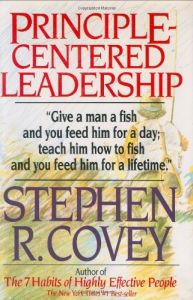
Stephen R. Covey shows how you can become a principle-centered leader, and how you can use principle-centered leadership philosophies to more effectively manage people. Principle-centered power is created when the values of the follower and leader overlap. Control is apparent, but it is not external; it is self-control. It elicits a willingness to risk doing the right things because they are valued and modelled by the leader. People follow the leader because of who he or she is. This book is full of lists, charts, diagrams and anecdotal examples to help the reader fully comprehend the ideas contained within. The cover of the book has the famous quote, "Give a man a fish and you feed him for a day; teach a man to fish and you feed him for a lifetime." This quote encapsulates the intentions of the book. Covey wants to teach you how to fish. And he wants you to know it’s not as simple as picking a lure and casting. Good fishermen learn through years of applying their skills. Managers become good managers through years of applying principle-centered leadership. getAbstract recommends the book to managers and executives at all levels.

Summary

Characteristics of Principle-Centered Leaders

Principle-centered leadership begins with yourself and spreads out toward those you lead. There are many management techniques and tricks you can use to achieve some short-term benefits, but without strong principle-centered leadership your staff will become cynical towards each new quick-fix solution.

There are eight characteristics of principle-centered leaders. Strive to make these eight characteristics reflective of your own leadership style.

Characteristic One: Learn continually.

Educate yourself through experience. Read, seek training, take classes, listen to others and learn with both your ears and eyes. Discover that the more you know, the more you don’t know. As your circle of knowledge expands, so does your outside edge of ignorance.

Characteristic Two: Be service-oriented.

See life as a mission, not as a career. Every morning “yoke up” and put on the harness of service. Any effort to become principle-centered as an intellectual exercise will fail. You need to have a sense of responsibility and activity.

Characteristic Three: Radiate positive energy.

Be cheerful, pleasant...

About the Author

Stephen R. Covey  is an internationally respected leadership authority, teacher, organizational consultant, founder of the former Covey Leadership Center, and co-chairman of Franklin Covey Co. He has made teaching Principle-Centered Living and Principle-Centered Leadership his life’s work. He holds an M.B.A. from Harvard and a doctorate from Brigham Young University. He has been recognized as one of Time magazine’s twenty-five most influential Americans. His other bestsellers are The 7 Habits of Highly Effective People and First Things First.



Comment on this summary

More on this topic

Related Skills

Développer son intelligence émotionnelle
Apprendre à s'adapter
Prendre confiance en soi
Convertir les prospects
Promouvoir une culture de l'innovation
Ressources Humaines
Innovation
Diriger de façon éthique
Diriger stratégiquement
Bien vivre
Gérer la communication de l'entreprise
Management
Marketing
Développement personnel
Promouvoir la diversité, l'équité et l'inclusion
Vente
Façonner la culture d'entreprise
Compétences professionnelles
Améliorer sa communication non-verbale
Trouver du sens
Susciter la confiance
Gérer la communication de crise
Manage People and Talent
Communiquer avec les parties prenantes
Encourager l'appropriation chez les autres
Navigate Leadership Challenges
Construire et entretenir le bien-être
Concilier vie professionnelle et vie privée
Gérer l'incertitude
Faire preuve d’authenticité
Tisser des liens avec les prospects
Direction exécutive
S’adapter à la politique de l’entreprise
Se comprendre soi-même
Gérer l'impact de son leadership
Practice Transformational Leadership
Faire preuve d’empathie et de compassion
Oser se montrer vulnérable
Composer avec les personnes difficiles
Gérer ses émotions
Gérer ses relations avec ses supérieurs
Compétences relationnelles
Vivre intentionnellement
Promouvoir la collaboration
Faire preuve d'humilité
Exceller dans l'art de la conversation
Foster Team Culture
Cultiver l'autodiscipline
Relever les défis
Leadership
Développer ses compétences interpersonnelles
Prendre conscience de soi
Bien écouter
Adapter son style de communication
Trouver un but
Drive Team Performance
Tirer parti de ses points forts
Améliorer sa maîtrise de soi
Pratiquer le Servant Leadership
Prendre ses responsabilités
Communiquer en contexte interculturel
Promouvoir une communication ouverte
S’auto-diriger
Exercer une influence
Renforcer la sécurité psychologique
Savoir collaborer
Se former tout au long de la vie
Strengthen Team Collaboration
Prendre soin de soi
Apprendre à échouer intelligemment
Communiquer de façon transparente
Être coachable
Apprendre par soi-même
Renforcer sa présence
Persuader efficacement
Développer un état d'esprit de croissance
Gérer la communication au sein de l'équipe
Soutenir ses collaborateurs
Cultiver la curiosité
Communiquer stratégiquement
Communiquer clairement
Comprendre la communication
Gérer les conversations difficiles
Prendre l'habitude d'apprendre
Communiquer efficacement