

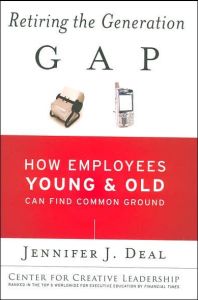
Book
Retiring the Generation Gap
How Employees Young & Old Can Find Common Ground



Cliquez sur le code avec le bouton droit de la souris pour copier l'image.
Remarque : Sur un portail ASP, le lien mentionné à côté du code est spécifique au portail !
Recommendation
This ambitious book, based on a seven-year survey of more than 3,200 employees, examines how different generations view the workplace. Author Jennifer Deal handles the difficult task of presenting, distilling and interpreting the data according to age group and worker status. Her use of applicable real-life scenarios is effective in helping managers implement these findings, but the presentation of research data makes for weighty reading. getAbstract recommends this book to managers who have problems with intergenerational tensions at work, though Deal concludes that the generation gap is overrated and employees of all ages desire many of the same things.
Summary
About the Author
Jennifer J. Deal is a research scientist at the Center for Creative Leadership (CCL) in San Diego, California, where she manages the World Leadership Survey and the Emerging Leaders research project.
By the same author
Learners who read this summary also read
Related Skills

Développer son intelligence émotionnelle

Apprendre à s'adapter

Construire et entretenir le bien-être

Communiquer efficacement

Develop Team Members

Transformation numérique

Drive Team Performance

Enable Digital Organization

Promouvoir une culture de l'innovation

Foster Team Culture

Ressources Humaines

Innovation

Diriger de façon éthique

S’auto-diriger

Bien vivre

Manage Learning and Development

Gérer les performances

Management

Savoir collaborer

Développer ses compétences interpersonnelles

Développement personnel

Promouvoir la diversité, l'équité et l'inclusion

Comprendre les organisations

Compétences professionnelles

Comprendre la motivation

Améliorer l'expérience de ses employés

Manage People and Talent

Proposer des programmes de coaching

Gérer le changement

Prendre l'habitude d'apprendre

Développer sa capacité de réflexion

Comprendre les comportements humains

Faire preuve d'humilité

Donner du feedback

Apprendre par soi-même

S'adapter au changement

Trouver du sens

Direction exécutive

Se former tout au long de la vie

Comprendre les approches de leadership

Bien vieillir

Être coachable

Faire preuve d’authenticité

Mettre à jour les compétences des employés

Compétences relationnelles

Assurer le mentorat des employés

Mettre en œuvre le coaching des cadres

Gérer l'impact de son leadership

Promouvoir l'inclusion générationnelle

Susciter la confiance

Practice Transformational Leadership

Fidéliser ses employés

S’adapter à la politique de l’entreprise

Leadership

Renforcer la sécurité psychologique

Promouvoir une culture de l'apprentissage

Pratiquer le Servant Leadership

Comprendre l'apprentissage

Savoir coacher

Comment on this summary