Rejoignez getAbstract pour lire le résumé !

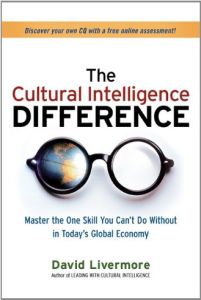
The Cultural Intelligence Difference

Rejoignez getAbstract pour lire le résumé !

The Cultural Intelligence Difference

Master the One Skill You Can't Do Without in Today's Global Economy

AMACOM,

15 minutes de lecture
10 points à retenir
Audio et texte

Aperçu

The CQ difference: Knowing how to communicate and connect with people from other cultures.

Editorial Rating

8

getAbstract Rating

  • Applicable

Recommendation

In the Philippines, people gamble at funerals. In Indonesia, you point with your thumb because pointing with a finger is poor etiquette. In Thailand, crossing your legs in public is rude. In Japan, you remove your shoes before entering someone’s home. Westerners used to find such practices charming or odd, but irrelevant and distant. In the modern, interconnected world, distances have shrunk and your success may depend on understanding other cultures and relating to them with thoughtfulness and sensitivity. David Livermore, an accomplished world traveler, offers helpful tips about worldwide cultures. His “cultural intelligence” self-assessment test is available online (accessible for free with a code in the book) rather than in the book itself, which would be more convenient. getAbstract recommends Livermore’s guidance to those working in unfamiliar countries and to those who need to relate to colleagues, clients and friends in diverse cultures and international business settings.

Summary

What’s Your “Cultural Intelligence”?

Your intelligence quotient (IQ), emotional intelligence quotient (EQ) and social intelligence quotient (SQ) are vital to your success. But even more important in today’s interconnected world is your cultural intelligence quotient (CQ), that is, your “capability to function effectively in a variety of cultural contexts – including national, ethnic, organizational and generational.” CQ includes adapting to ethnic foods, new languages, unfamiliar dress, local gender relations and international currencies. Regardless of specific differences among cultures, CQ involves understanding and being sensitive to people from other cultures, and how they think, feel and act.

People with high CQs operate effectively in the global marketplace and prove that CQ is a valuable and widely applicable problem-solving asset. CQ does not focus on a single culture; instead, it bespeaks your capacity to make sense of a wide number of cultures.

CQ Benefits

Your CQ develops as you learn to interpret the actions of people from diverse cultures. In a multicultural work environment, a high CQ improves and sensitizes your leadership, decision-making...

About the Author

David Livermore, president and a partner at the Cultural Intelligence Center, wrote Leading with Cultural Intelligence.


Comment on this summary

More on this topic

Related Skills

Développer son intelligence émotionnelle
Apprendre à s'adapter
Construire et entretenir le bien-être
Études de cas sur les ressources humaines
Direction exécutive
Ressources Humaines
Leadership
Bien vivre
Manage Learning and Development
Manage People and Talent
Management
Savoir collaborer
Développement personnel
Promouvoir la diversité, l'équité et l'inclusion
Comprendre les organisations
Compétences professionnelles
Gérer l'impact de son leadership
Comprendre les comportements sociaux
Renforcer sa présence
S’adapter à la politique de l’entreprise
Faire preuve d’empathie et de compassion
Gérer les conversations difficiles
Comprendre les différences culturelles
Améliorer sa maîtrise de soi
Découvrir les tendances culturelles
Surmonter les difficultés
Améliorer sa communication non-verbale
Comprendre la culture d'entreprise
Lutter contre les microagressions
Façonner la culture d'entreprise
Prendre confiance en soi
Communiquer de façon inclusive
S’adapter à la culture d’entreprise
Prendre conscience de soi
Comprendre la communication
Comprendre la motivation
Comprendre les émotions
Poser des questions
Construire sa résilience
Adapter son style de communication
Communiquer en contexte interculturel
S’auto-diriger
Compétences relationnelles
Se comprendre soi-même
Développer ses compétences interpersonnelles
Prendre l'habitude d'apprendre
S'ouvrir aux autres cultures
Découvrir des perspectives internationales
Études de cas sur la culture d'entreprise
Communiquer efficacement
Se motiver
Apprendre par soi-même