
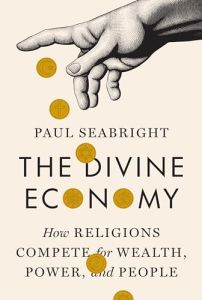
Book
The Divine Economy
How Religions Compete for Wealth, Power, and People



Disponibilité du résumé : dans le monde entier
Cliquez sur le code avec le bouton droit de la souris pour copier l'image.
Remarque : Sur un portail ASP, le lien mentionné à côté du code est spécifique au portail !
Recommendation
Religion persists because it evidently provides something people need. Professor Paul Seabright’s massive tome attempts a task virtually untouched since seminal economist Adam Smith attempted it in the 18th century: Considering religion as an economic phenomenon. In religion as in greater society, economic trends lean toward less localization, more competition, shape-shifting technological change, and the more recent role of religions as platforms that serve a unifying purpose. Seabright is prolix and meandering. He’s generous with anecdotes and observations, although not with clear conclusions.
Summary
About the Author
Paul Seabright teaches economics at the Toulouse School of Economics and was the director of the Institute for Advanced Study in Toulouse. Formerly of Oxford and Cambridge, he is also the author of The Company of Strangers: A Natural History of Economic Life; The War of the Sexes: How Conflict and Cooperation Have Shaped Men and Women from Prehistory to the Present; Sexonomics; and La société des inconnus: Histoire naturelle de la collectivité.

Comment on this summary