
Ignorer la navigation
The Leadership Capital Index
Book

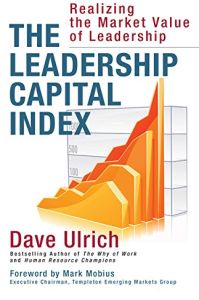
The Leadership Capital Index

Realizing the Market Value of Leadership

Berrett-Koehler, 2015 plus...

Buy the book


Editorial Rating

8

getAbstract Rating

  • Innovative

Recommendation

Almost every investor and business leader acknowledges the need for better methods for assessing the value of companies. The sum of an organization’s hard assets and its “intangibles” is too blunt an instrument. Investors seek insights about the quality of a firm’s workforce and, especially, its leadership, so they can make a more sophisticated, informed investing decision. Until now, the professional landscape offered few reliable, structured processes for measuring the quality of leaders. Once again, Dave Ulrich – arguably the foremost human capital thinker – provides the groundwork, in this case offering a tool set and a process that can change the game of valuing and rating companies. Long-term investors with significant assets to invest will gain the most from Ulrich’s process, but getAbstract believes it will also prove valuable to CEOs, board members, and anyone seeking a structured, evidence-based, rigorous method of evaluating organizational leadership.

Summary

Valuing Organizations

Over the past several decades, investors have evolved from valuing companies based solely on their ownership of “tangibles” – physical assets such as buildings, inventory, machines, fleets, and the like – to a better and more accurate measurement that includes their “intangibles” such as patents, talent, reputation, intellectual property, and more. Today, the value of most firms rests largely in their intangibles. In the developed world in particular, dynamic and fast-evolving economies reward companies that have good ideas and the ability to innovate rapidly and to adapt to unexpected market and technological change. By contrast, formerly iconic companies, even those with vast and valuable physical assets, often experience valuation decreases unless they demonstrate the ability to leverage talent and adapt to changing conditions.

Today, even adding intangibles and tangible assets doesn’t provide the complete package of data that investors need to value a company accurately. After investors assess and add up the broad measures of tangible and intangible assets, what remains is a blunt instrument for investment decisions that can risk millions ...

About the Author

A leading authority in HR and a thought leader on the Thinkers50 list, Dave Ulrich teaches business administration at the University of Michigan.


Comment on this summary

More on this topic

Related Skills

AI Transformation
Attirer et recruter des talents
Communiquer efficacement
Finances d'entreprise
Develop Financial Literacy
Développer son organisation
Transformation numérique
Secteur de l'éducation
Avenir du travail
Drive AI Transformation
Enable Digital Organization
Execute Digital Operations
Ressources Humaines
Innover stratégiquement
Innovation
Diriger de façon éthique
Manage Learning and Development
Perspectives de marché par secteur
Navigate Leadership Challenges
Développement personnel
Planifier la performance financière
Promouvoir la diversité, l'équité et l'inclusion
Compétences relationnelles
Durabilité
Understand Economics
Comprendre l'innovation
Compétences professionnelles
Encourager l'amélioration continue
Acteurs clés du secteur de l'éducation
Foster Team Culture
Diriger des équipes distantes ou hybrides
Direction exécutive
Comprendre l'apprentissage organisationnel
Soutenir le développement des leaders
Susciter l'engagement des employés
Études de cas sur la direction exécutive
Organize for AI
Mettre en place la méthode agile
Miser sur l'ambidextrie organisationnelle
Comprendre la culture d'entreprise
Gérer les talents
Leverage AI for Leadership
Mettre en œuvre des stratégies ESG
Leadership
Gérer un portefeuille d'investissement
Se comprendre soi-même
Nouvelles approches de leadership
Communiquer stratégiquement
Investir et favoriser les fusions-acquisitions
Mettre en œuvre le coaching des cadres
Conduire le changement
Comprendre le changement organisationnel
Diriger stratégiquement
Comprendre l'intérêt commercial des critères ESG
Améliorer l'expérience de ses employés
Indicateurs économiques
Évaluer les candidats
Pratiquer le Servant Leadership
Build Digital Culture
Gérer le changement
Management
Tirer parti des Groupes de Ressources pour les Employés
Drive Team Performance
Practice Transformational Leadership
S’auto-diriger
Comprendre les organisations
Manage People and Talent
Façonner la culture d'entreprise
Gérer le capital intellectuel
Comprendre les approches de leadership
Gérer l'impact de son leadership
Stimuler les performances de l’entreprise
Investissement dans la valeur
Evaluer une entreprise