

Ignorer la navigation
The New CEO
Book

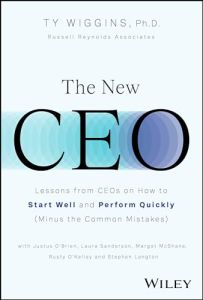
The New CEO

Lessons from CEOs on How to Start Well and Perform Quickly (Minus the Common Mistakes)

Wiley, 2024 plus...

Buy the book


Editorial Rating

8

getAbstract Rating

  • Applicable
  • Concrete Examples
  • Insider's Take

Recommendation

Even decades of leadership experience don’t guarantee a smooth transition to the role of CEO, a job more complex and consequential than any outsider can imagine. Leadership consultant Ty Wiggins warns that first-time CEOs are taking on a complex role that makes them responsible for the welfare of the company, its customers, and its employees and their careers. Drawing on interviews with successful executives, Wiggins offers a handbook of strategies for dealing with immediate challenges in your first few months on the job – including instilling your principles into the company’s ethos, working with the board, and building a leadership team.

Summary

First-time CEOs are in for a shock. Expect the unexpected.

New CEOs usually have months or years of preparation. And yet, as PepsiCo CEO Ramon Laguarta notes, no one can truly prepare for the top spot’s complexity.

When you assume the role of CEO, you become personally responsible for maintaining the foundations of your company – its strategy, financial health, and long-term outlook – plus the welfare of your employees, stakeholders, and their families. Your decisions also will have a significant impact on the firm’s suppliers, partners, and customers.

Some CEOs report that the biggest surprise about stepping into the corner office is how alone a top leader can feel. As a CEO, you will interact with people constantly, but you will no longer have peer-to-peer relationships in which you can hash out issues candidly. Instead, you must guard every utterance, because everyone in the organization will scrutinize everything you say and do.

Another surprise is the enormous increase in demands on your time. People will compete for your attention, even when you’re in the middle of contending with complicated, consequential issues. Therefore, treat...

About the Author

Ty Wiggins is the global head of the CEO and Executive Transition Practice at Russell Reynolds Associates.


Comment on this summary

More on this topic

Related Skills

Développer sa créativité
Développer son intelligence émotionnelle
Apprendre à s'adapter
Drive Team Performance
Ressources Humaines
Diriger de façon éthique
Gérer les risques
Management
Marketing
Savoir collaborer
Développer ses compétences interpersonnelles
Développement personnel
Planifier stratégiquement
Promouvoir la diversité, l'équité et l'inclusion
Façonner la culture d'entreprise
Strengthen Team Collaboration
Compétences professionnelles
S’auto-diriger
Comprendre la communication
Développer un état d'esprit de croissance
Améliorer sa communication non-verbale
Remettre en question les hypothèses
Faire progresser sa carrière
Communiquer stratégiquement
Gérer sa réputation
Communiquer de façon inclusive
Diriger stratégiquement
Compétences relationnelles
Assurer la continuité des activités
Pratiquer le Servant Leadership
Faire preuve d’authenticité
Gérer la réputation de l'entreprise
Diriger en cas de crise
Navigate Leadership Challenges
Prendre confiance en soi
Faire preuve d'humilité
Practice Transformational Leadership
Carrière
Prendre la parole en public
Gérer ses relations avec ses supérieurs
Gérer les conversations difficiles
Cultiver la curiosité
Prendre conscience de soi
Se comprendre soi-même
Communiquer de façon transparente
Oser se montrer vulnérable
Gérer la communication au sein de l'équipe
Promouvoir une communication ouverte
Adapter son style de communication
Conduire le changement
Leadership
Gérer les crises
Gérer le changement
Communiquer avec les parties prenantes
Direction exécutive
Communiquer l'objectif de l'entreprise
Gérer la communication interne
Communiquer clairement
Renforcer sa présence
Gérer la communication de crise
Communiquer efficacement
Développer le messaging de l'entreprise
Gérer la communication de l'entreprise
Réussir dans un nouvel emploi
Communiquer sur la stratégie d'entreprise