
Ignorer la navigation
The Power of Employee Resource Groups
Book

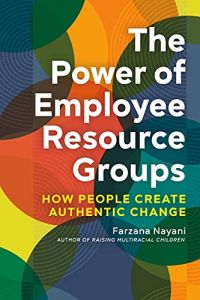
The Power of Employee Resource Groups

How People Create Authentic Change

Berrett-Koehler, 2022 plus...

Buy the book


Editorial Rating

7

getAbstract Rating

  • Applicable
  • Eye Opening
  • Concrete Examples

Recommendation

At leading organizations such as Uber and LinkedIn, ERGs have proved themselves important pillars in driving employee engagement and organizational performance alike. In this helpful guide to operating ERGs that drive business results, diversity, equity and inclusion (DEI) consultant Farzana Nayani bridges theory with practical application. She offers helpful strategies and frameworks that highlight how ERGs can foster closer bonds between employees and their organizations, advance DEI goals, and help guide leaders through DEI-related crises and opportunities.

Summary

Employee resource groups (ERGs) support employees and contribute to organizational performance. 

By providing a space for identity-based community building and informing companies about group-specific needs, issues and opportunities, ERGs contribute to an organization’s broader commitment to diversity, inclusion, equity and belonging. Business Resource Groups (BRGs) take this a step further, aligning identity with business roles – for example, a group of women engineers. Both ERGs and BRGs focus on business goals, but organizations often define each group’s membership and purpose differently.

ERGs emerged in the 1970s at companies like Xerox to address workplace discrimination. These groups, also known as employee networks or diversity councils, represent a range of identities, including gender, race, sexual orientation, and more. They focus on engaging employees and organizing DEI-related initiatives and must continually prove their value to maintain support and funding from organizational leadership.

ERGs build relationships among employees and with suppliers.

ERGs offer belonging and ...

About the Author

Farzana Nayani coaches and speaks on diversity, equity and inclusion, with a focus on intercultural communication and employee engagement. Her expertise in advising employee resource groups has won her prominent engagements across North America, including at the White House.


Comment on this summary

More on this topic

Related Skills

Faire progresser sa carrière
Carrière
Communiquer efficacement
Transformation numérique
Execute Digital Operations
Foster Team Culture
Diriger stratégiquement
Manage Learning and Development
Management
Compétences relationnelles
Strengthen Team Collaboration
Durabilité
Compétences professionnelles
Diriger de façon inclusive
Développer son organisation
Faciliter le brainstorming de groupe
Promouvoir une culture de l'apprentissage
Promouvoir l'inclusion socio-économique
Savoir collaborer
Promouvoir la neuro-inclusion
Promouvoir l'inclusion des femmes
Susciter l'engagement des employés
Promouvoir l'inclusion des personnes handicapées
Direction exécutive
Comprendre les organisations
Encourager la collaboration interfonctionnelle
Promouvoir l'inclusion ethnique
Faire carrière en tant que femme
Mettre en place la méthode agile
S'ouvrir aux autres cultures
Évoluer en tant que femme dirigeante
Devenir un allié des minorités dans l’équipe
Défendre la diversité
Leadership
Stimuler les performances de l’entreprise
Promouvoir la diversité, l'équité et l'inclusion
Suivre les progrès de la DEI
Promouvoir l'inclusion LGBTQ+
Manage People and Talent
Gérer les relations avec les employés
Proposer des modalités de travail flexibles
Gérer le changement
Axer le recrutement sur la diversité
Communiquer de façon inclusive
Promouvoir l'inclusion générationnelle
Mettre en œuvre des stratégies ESG
Façonner la culture d'entreprise
Améliorer l'expérience de ses employés
Construire une culture inclusive
Créer un sentiment d'appartenance
Ressources Humaines
Tirer parti des Groupes de Ressources pour les Employés