
Navigation überspringen
The Power of Resilience
Book

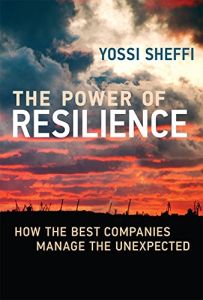
The Power of Resilience

How the Best Companies Manage the Unexpected

MIT Press, 2015 Mehr

Buy the book


Editorial Rating

8

getAbstract Rating

  • Applicable

Recommendation

Interdependencies within and between national economies make global and national systems – like financial networks or the world’s food chain – increasingly susceptible to disruption. A factory fire in one corner of the globe might create a supply chain domino effect – halting production of finished goods worldwide. MIT engineering instructor Yossi Sheffi warns that a breach of environmental standards by an obscure, deep-tier supplier might threaten the reputation of firms further up the chain. getAbstract recommends his forward-looking overview to leaders and risk managers – especially in large firms – who are building the response capability to deal quickly and effectively with disasters and disruptions.

Summary

Risk

Organizations navigate an increasingly complex and interdependent world. Exports of goods and materials steadily rocket upward. Container ships carrying goods more than doubled their capacity from 1999 to 2013. Materials move between nations as sophisticated computer and communications networks extract inefficiencies from the system, lowering costs while heightening risk.

Risk exists throughout the supply chain. A final product often relies on tiers of providers scattered worldwide. Few end producers have visibility into the workings of their deep-tier suppliers. This leaves them, their customers and the economy vulnerable to natural disaster, acts of sabotage, network failure, labor issues, financial crises, political interference and cyberattack. With scant inventory due to made-to-order practices, a thin margin of error and many “moving pieces,” firms face exposure and risk. The global supply chain binds the world so closely that a large earthquake inflicts almost as much damage 10,000 miles from its epicenter as it does 10 miles away.

Japan, 2011

The 2011 tsunami in Japan caught governments and companies by surprise. A 9.0-level earthquake in...

About the Author

Yossi Sheffi teaches engineering systems at MIT and advises firms and governments on risk and supply chain management.


Comment on this summary

  • Avatar
  • Avatar
    A. U. 6 years ago
    Think out of box
  • Avatar
    M. J. 6 years ago
    Very well explained.
  • Avatar
    G. Y. 6 years ago
    Learned a new aspect of risk management & why preparedness is necessary for future.

More on this topic

Related Skills

AI Transformation
Construire et entretenir le bien-être
Communiquer efficacement
Finances d'entreprise
Développer son organisation
Développer sa capacité de réflexion
Transformation numérique
Secteur de l'aéronautique, du spatial et de la défense
Secteur alimentation et boissons
Secteur industriel
Secteur des minéraux et métaux
Secteur du transport et de la logistique
Piloter la gestion de projet
Execute Digital Operations
Direction exécutive
Ressources Humaines
Mettre en œuvre des stratégies ESG
Innovation
Diriger stratégiquement
Leadership
Prendre de bonnes décisions
Gérer le changement
Gérer la communication de l'entreprise
Manage People and Talent
Gérer les opérations de la chaîne logistique

Management
Perspectives de marché par secteur
Marketing
Navigate Leadership Challenges
Développement personnel
Compétences relationnelles
Comprendre l'innovation
Comprendre les organisations
Use AI for Production & Supply Chain
Compétences professionnelles
Use AI for Disruption Monitoring
Comprendre le changement organisationnel
Innover stratégiquement
Durabilité
Défis du secteur industriel
Gérer l'incertitude
Diriger en cas de crise
Réfléchir de manière stratégique
Gérer la communication de crise
Développer des stratégies d'adaptation au climat
Mettre en place la méthode agile
Govern Compliance and Risk
Construire sa résilience
Conduire le changement
Production et logistique
Défis du secteur alimentation et boissons
Enhance Cybersecurity
Défis du secteur des minéraux et métaux
Comprendre les risques climatiques
Use AI for Supplier Risk Monitoring
S'adapter au changement
Contrôler les risques financiers
Comprendre le changement climatique
Apprendre à s'adapter
Décider dans l'incertitude
Utiliser la planification de scénarios
Défis du secteur aérospatial et de la défense
Défis du secteur transport et logistique
Assurer la durabilité de la chaîne logistique
Miser sur l'ambidextrie organisationnelle
Surmonter les difficultés
Gérer les risques climatiques
Gérer les risques liés à la cybersécurité
Cultiver la flexibilité
Planifier stratégiquement
Gérer les risques de la chaîne logistique
Gérer les risques du projet
Gérer les crises
Connaître les risques de la chaîne logistique
Gérer les risques
Assurer la continuité des activités