
Rejoignez getAbstract pour lire le résumé !
Rejoignez getAbstract pour lire le résumé !
Blaise Agüera y Arcas
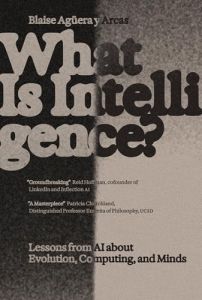
What Is Intelligence?
Lessons from AI About Evolution, Computing, and Minds
MIT Press, 2025
Aperçu
Whether human or artificial, intelligence is about prediction — and explains the origins of life.


Disponibilité du résumé : mondiale
Recommendation
What do the origins of biological life have to do with the foundations of computational theory? According to Blaise Agüera y Arcas, CTO of Technology and Society at Google, computation and intelligence mirror how biological life adapts and replicates itself. Moreover, intelligence isn’t limited to complex, reflective creatures like human beings: It hinges on modeling, predicting, and navigating the future. His text offers a wide-ranging, speculative examination of the nature of intelligence, complete with precise explanations of scientific and mathematical concepts, fascinating footnotes, and references that invite readers to dig deeper.
Summary
About the Author
Blaise Agüera y Arcas is a vice president at Google, where he serves as the CTO of Technology and Society. He is the founder of Paradigms of Intelligence, an organization focused on AI research, particularly the foundations of neural computing, active inference, evolution, and artificial life. He is also the author of Who Are We Now? and Ubi Sunt.

Comment on this summary