
Ignorer la navigation
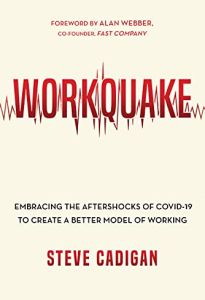
Workquake
Book

Workquake

Embracing the Aftershocks of COVID-19 to Create a Better Model of Working

Amplify, 2021 plus...

Buy the book


Editorial Rating

8

getAbstract Rating

  • Innovative
  • Engaging
  • Inspiring

Recommendation

Are a pricey education, a good job, hard work and company loyalty your tickets to success? Alas, talent strategist Steve Cadigan says, those notions are obsolete. A top college education may not be worth the time, money and worry anymore, he contends. Job hopping has replaced loyalty as the path forward. If you’re navigating the job market or wondering why younger colleagues do things differently, Cadigan offers solid answers. Despite the subtitle’s reference to COVID, he doesn’t cover the pandemic’s impact in depth here – just a few mentions. However, his advice remains highly relevant to a post-pandemic work landscape.

Summary

Rapidly changing technology means people and organizations can no longer predict what skills will best equip them for the future.

The World Economic Forum estimated [before the pandemic] that 133 million new jobs will emerge by 2025. Meanwhile, turnover is surging. Half of US employees between the ages of 25 and 35 stay in a job for less than 2.8 years, and organizations no longer promise long-term security. While CEOs complain about reduced employee loyalty, executives know economic and technological changes will require their companies to be nimble and able to change direction. They can’t commit to long-term employment.

Changing jobs expands employees’ networks and gives them new opportunities to learn, thus enhancing their value. Shifting employer demands require employees to learn continually to stay employable. Current workers are swelling the enrollment rosters in e-learning schools, whose market will be worth $325 billion in 2025.

College-educated individuals assess their personal value on the basis of their jobs. History-based expectations of employer paternalism have left some Americans psychologically unprepared for the...

About the Author

Steve Cadigan has more than 30 years of HR experience with a variety of corporations, including several venture capital firms.


Comment on this summary

More on this topic

Related Skills

AI Transformation
Construire et entretenir le bien-être
Créer sa startup
Rédiger un business plan
Développer son organisation
Création d’entreprise
Direction exécutive
Ressources Humaines
S'ouvrir aux autres cultures
Innover stratégiquement
Innovation
Leadership
Leverage AI for HR
Leverage AI for Leadership
Bien vivre
Manage Learning and Development
Gérer les risques
Management
Compétences relationnelles
Understand AI
Understand Economics
Comprendre les organisations
Compétences professionnelles
Faire progresser sa carrière
Développer sa capacité de réflexion
Gérer l'incertitude
Miser sur l'ambidextrie organisationnelle
Cultiver la flexibilité
Indicateurs économiques
Utiliser la planification de scénarios
Surmonter les difficultés
Études de cas sur les start-ups
S’auto-diriger
Guide Teams Through AI Transition
Trouver un but
Gérer les talents
Réussir en tant qu'entrepreneur
Use AI for Workforce Planning
Découvrir les changements sociétaux
Understand AI Impact on Work
Nouveaux modèles de travail
Bien vieillir
Compétences futures
Planifier sa carrière
Façonner son emploi
Manage People and Talent
Se comprendre soi-même
Être coachable
Développement personnel
Carrière
Avenir du travail
S'adapter au changement
Développer un état d'esprit de croissance
Positionner les talents stratégiquement
Améliorer ses compétences
Apprendre à s'adapter
Accompagner la mobilité interne
Trouver du sens
Apprendre par soi-même
Promouvoir une culture de l'apprentissage
Cultiver la curiosité
Prendre l'habitude d'apprendre
Se former tout au long de la vie