
跳过导航
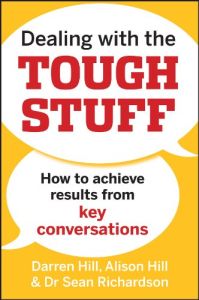
Dealing with the Tough Stuff
Book

Dealing with the Tough Stuff

How to Achieve Results from Key Conversations

Wiley, 2012 更多详情

Buy the book


Editorial Rating

8

getAbstract Rating

  • Applicable

Recommendation

Behavioral scientist Darren Hill and psychologists Alison Hill and Sean Richardson explain that behaviors are difficult, but people aren’t, at least, not most people. To show leaders how to handle difficult workplace conversations, the authors discuss verbal and nonverbal communication, restructuring, termination, crisis management, and more. Their advice is succinct and to the point. They give managers the nitty-gritty on handling difficult behaviors without pop psychology fluff. Their practical suggestions include using three-point communication to defuse tense situations and cultivating a growth mind-set for handling crises. The authors lighten the mood with clever, alliterative chapter titles, while delivering tough, workable advice. You’ll appreciate the layout, charts, diagrams, brief examples and useful lists – all good stuff, and not just tough stuff. getAbstract recommends this perceptive book to managers, teachers, parents and other leaders.

Summary

“Foundational Skills”

Managers with staying power learn to tackle personnel problems head-on, but to do that, you have to be prepared. Ask yourself if you address misunderstandings immediately or ignore them. Are you aware of how nonverbal communication affects “tough” conversations? How well do you deal with anger? Can people manipulate you by being emotional? Are you confident in your ability to manage difficult, big-picture moments, such as layoffs or restructurings? How would you respond during a crisis? The answers to these questions can reveal where you must improve so you can manage tough discussions effectively.

To figure out why people behave as they do, use the “ABC model,” that is, consider the “Antecedents, Behavior” and “Consequences.” An antecedent is “what comes before” – what led to a problematic behavior. Behavior is what a person does. Consequences are events that result from behavior. Most behaviors have multiple antecedents and consequences. You can help your employees modify their behaviors once they understand what drives the way they act. People generally don’t change a behavior without a reason. For example, a hard worker who suddenly starts...

About the Authors

Behavioral scientist Darren Hill is a popular speaker in Australia and leads the Tough Stuff workshops. Blogger, trainer and consultant Alison Hill is a registered psychologist, as is Sean Richardson, a former world-class athlete who specializes in high performance psychology.


Comment on this summary

More on this topic

Related Skills

Torne-se mais adaptável
Construa e mantenha o bem-estar
Converta clientes potenciais
Develop Team Members
Drive Team Performance
Fomente uma cultura de inovação
Foster Team Culture
Recursos Humanos
Inovação
Lidere com ética
Lidere estrategicamente
Viva bem
Gerencie a comunicação corporativa
Manage Learning and Development
Gerencie o desempenho
Gerencie riscos
Gerencie equipes e departamentos
Gestão
Marketing
Domine a colaboração
Otimize o desempenho da equipe
Crescimento pessoal
Planeje estrategicamente
Promova diversidade, equidade e inclusão
Vendas
Molde a cultura organizacional
Strengthen Team Collaboration
Compreenda as organizações
Habilidades no ambiente de trabalho
Permita-se ser vulnerável
Escute atentamente
Estabeleça limites saudáveis
Domine a oratória
Entenda a dinâmica da equipe
Desenvolva hábitos positivos
Demita funcionários
Aprimore a sua saúde mental
Construa rapport com clientes potenciais
Apresente-se pessoalmente
Cultive uma mentalidade de crescimento
Understand Organizational Behavior
Comunique-se estrategicamente
Entenda as emoções humanas
Encare os desafios
Gerencie mudanças
Work Remotely
Delegue com eficácia
Cultive a positividade
Lidere durante mudanças
Melhore a experiência do funcionário
Pratique a liderança servidora
Faça perguntas
Construa a sua resiliência
Demonstre empatia e compaixão
Administre ações disciplinares
Compreenda a si mesmo
Practice Transformational Leadership
Incentive a comunicação aberta
Lidere a si mesmo
Gerencie a comunicação da equipe
Gerencie de baixo para cima
Entenda a motivação
Lide bem com a incerteza
Defina padrões de desempenho
Desenvolva autoconsciência
Comunique-se com transparência
Conduza avaliações de desempenho
Destaque-se nas conversas
Construa segurança psicológica
Entenda a comunicação
Comunique-se de forma eficaz
Liderança executiva

Seja emocionalmente inteligente
Gerencie as suas emoções
Gerencie o seu impacto como líder
Forneça feedback
Resolva conflitos com habilidade
Entenda o comportamento humano
Garanta a continuidade dos negócios
Gerencie relações trabalhistas
Supere desafios
Facilite discussões
Construa a sua presença
Adapte o seu estilo de comunicação
Liderança
Gerencie crises na comunicação
Domine habilidades interpessoais
Lide com pessoas difíceis
Competências comportamentais
Navigate Leadership Challenges
Navegue a política corporativa
Manage People and Talent
Gerencie crises
Conduza conversas difíceis
Reconheça sinais sociais
Expresse-se com clareza
Ajude a equipe a superar crises

Comunique-se sem palavras