
Book
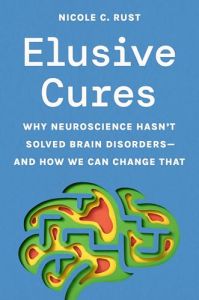
Elusive Cures
Why Neuroscience Hasn’t Solved Brain Disorders ― and How We Can Change That



Clique com o botão direito no código para copiar a imagem.
Nota: Em um portal em ASP, o link atrás do código é específico do portal!
Recommendation
Neuroscience research is often premised on the idea that a better understanding of the brain will lead to the effective treatment of disorders like Alzheimer’s, depression, and schizophrenia. Yet the success rate of this “bench to bedside” approach is weak, neuroscientist Nicole C. Rust explains in this intriguing text. Drawing on decades of experience in her field, Rust unpacks the latest cutting-edge research on brain disorders and argues that to develop effective treatments, people need to explore brain functions as part of a complex system that continuously adapts to changing conditions.
Summary
About the Author
Nicole C. Rust is an American neuroscientist, psychologist, and professor of psychology at the University of Pennsylvania. She studies visual perception, visual recognition memory, and mood.

Comment on this summary