
Saltar a navegação
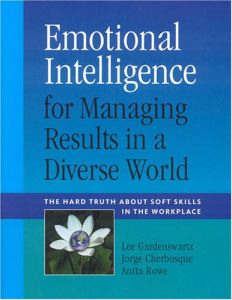
Emotional Intelligence for Managing Results in a Diverse World
Book

Emotional Intelligence for Managing Results in a Diverse World

The Hard Truth about Soft Skills in the Workplace

Davies-Black Publishing, 2008 mais...

Buy the book


Editorial Rating

7

getAbstract Rating

  • Applicable

Recommendation

Feelings and emotions affect how people perform their jobs, of course, and shape the tenor of their workplaces. The impact and applicability of emotional intelligence (EI) at work is well established. If you’re ready for a more focused treatment, Lee Gardenswartz, Jorge Cherbosque and Anita Rowe offer this manual about the use of EI in working with and managing all kinds of people. They submit that dealing with human differences triggers a variety of emotions, many of which are counterproductive. They provide a four-part “Emotional Intelligence and Diversity Model” to help managers handle their emotions – and their diverse employees – effectively. The book includes an assortment of exercises, charts and quizzes to help raise your emotional intelligence. getAbstract finds that this quite specific guide is very useful for managers, particularly less experienced ones, whose workplaces present diversity challenges.

Summary

“Feelings, Nothing More Than Feelings...”

Your feelings are an essential part of who you are. That doesn’t change at work, where feelings affect performance. In fact, your emotions supply the fuel that drives your energy, enthusiasm and inspiration. However, emotions also can be a source of anger and frustration. If not managed properly, they can cause problems in your workplace.

Those who cope best with their emotions have well-developed emotional intelligence (EI), “the ability to understand and deal with feelings, both your own and those of others, in a healthy and constructive way.”

Feelings are your body’s way of telling you that something significant is happening. Suppressing them has negative consequences. Unexpressed feelings may cause dysfunctional behaviors, including anxiety, depression or substance abuse. Unfortunately, societal expectations condition many people from early childhood to disregard their feelings. Just think of common phrases like “chill out,” “big boys don’t cry” or “keep a stiff upper lip.” Unacknowledged emotions can still influence behavior; to be able to manage your feelings, you first have to recognize them.

Emotional Intelligence...

About the Authors

Lee Gardenswartz, Ph.D., is a diversity trainer and a principal in a management consulting company. Anita Rowe, Ph.D., is a diversity consultant and partner in the Emotional Intelligence and Diversity Institute. She and Gardenswartz also published Managing Diversity and the Global Diversity Desk Reference. Jorge Cherbosque, Ph.D., teaches at the Anderson School of Management at UCLA and is co-director of the staff Counseling and Consulting Center.


Comment on this summary

More on this topic

Related Skills

Construa confiança
Drive Team Performance
Melhore a experiência do funcionário
Fomente uma cultura de inovação
Foster Team Culture
Recursos Humanos
Inovação
Lidere com ética
Viva bem
Tome boas decisões
Gerencie o desempenho
Gestão
Promova diversidade, equidade e inclusão
Reforce o seu alfabetismo digital
Compreenda as organizações
Habilidades no ambiente de trabalho
Understand Organizational Behavior
Compreenda o comportamento social
Demonstre empatia e compaixão
Desenvolva suas habilidades de pensamento
Destaque-se nas conversas
Promova a inclusão étnica
Promova a inclusão geracional
Entenda a dinâmica da equipe
Construa a sua resiliência
Colabore com criatividade
Comunique-se de forma eficaz
Liderança executiva

Gerencie mudanças
Resolva problemas
Compreenda as microagressões
Manage People and Talent
Promova a neuro inclusão
Seja criativo
Incentive a colaboração
Molde a cultura organizacional
Descubra tendências culturais
Assuma a responsabilidade pessoal
Cultive a positividade
Lide com pessoas difíceis
Influencie pessoas positivamente
Supere a síndrome do impostor
Estimule a criatividade
Combata microagressões
Seja um aprendiz autônomo
Crescimento pessoal
Construa a sua presença
Entenda o comportamento humano
Viva intencionalmente
Gerencie o estresse
Gerencie o seu impacto como líder
Navigate Leadership Challenges
Pratique o mindfulness
Reconheça vieses inconscientes
Facilite a ideação em grupo
Supere a autocrítica
Liderança
Aprimore a sua saúde mental
Lide bem com a incerteza
Compreenda tipos de personalidade
Colabore virtualmente
Facilite discussões
Amplie a sua consciência cultural
Considere outras perspectivas
Torne-se mais adaptável
Mitigue os vieses cognitivos
Defenda a diversidade
Aceite ser orientado
Domine a colaboração
Conduza conversas difíceis
Navegue a política corporativa
Supere desafios
Reconheça sinais sociais
Estabeleça limites saudáveis
Cultive a autodisciplina
Lidere durante mudanças
Adapte o seu estilo de comunicação
Permita-se ser vulnerável
Pratique a liderança servidora
Seja autêntico
Cultive uma mentalidade de crescimento
Encontre significado
Practice Transformational Leadership
Construa segurança psicológica
Construa e mantenha o bem-estar
Pratique a humildade
Strengthen Team Collaboration
Compreenda a si mesmo
Entenda a comunicação
Explore perspectivas globais
Lidere a si mesmo
Entenda as emoções humanas
Desenvolva o autodomínio
Competências comportamentais
Entenda a cultura organizacional
Colabore entre funções diversas
Seja emocionalmente inteligente
Gerencie as suas emoções
Desenvolva autoconsciência
Navegue na cultura corporativa
Domine habilidades interpessoais
Comunique-se entre culturas
Entenda as diferenças culturais