Saltar a navegação
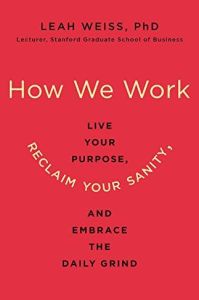
How We Work
Book

How We Work

Live Your Purpose, Reclaim Your Sanity and Embrace the Daily Grind

Harper Wave, 2018 mais...

Buy the book


Editorial Rating

7

getAbstract Rating

  • Eloquent
  • Hot Topic
  • Engaging

Recommendation

Based on her popular course at Stanford University’s Graduate School of Business, corporate leadership consultant and professor Leah Weiss offers a clear, thoughtful guide that helps you understand how mindfulness can assist you in finding purpose, reflecting on failure and bettering your work life. Mindfulness lets you recognize when your attention strays and allows you to guide it back with intention. It helps you develop soft skills such as compassion and teamwork. Mindfulness training enables employees and leaders to support one another, challenge the status quo, embrace “radical transparency” and grant the “whole self” space at work.

Summary

The “toxic workplace” refers to toxic expectations.

In the 1980s, toxic workplaces referred to office buildings with poor air quality due to bad ventilation and harmful substances in the environment. Changes to make buildings more “green” improved employees’ overall well-being at work, but these changes didn’t address another toxic element: stress.

Many Americans work too much because they think that busyness grants status. However, that status comes at a cost – as high rates of addiction, obesity, divorce, depression, anxiety, loneliness and burnout attest.

A toxic workplace favors those who push others aside to get ahead, because productivity and profit matter more than employee satisfaction.

In 2008, during the financial crisis, the Harvard Business School created a Hippocratic Oath for Managers. The oath, however, didn’t explain how managers can become better leaders. Ethics classes provide guidance, but courses in soft skills that require critical thinking are even more useful as they teach you how to collaborate and exhibit strong emotional intelligence. Mindfulness helps develop these skills; it can improve...

About the Author

Researcher, professor, consultant and author Leah Weiss, PhD, teaches compassionate leadership at the Stanford Graduate School of Business. She is the principal teacher and founding faculty for Stanford’s Compassion Cultivation Program, conceived by the Dalai Lama.


Comment on this summary

More on this topic

Related Skills

Seja criativo
Seja um aprendiz autônomo
Torne-se mais adaptável
Torne-se mais produtivo
Comunique-se de forma eficaz
Transformação digital
Drive Team Performance
Enhance Cybersecurity
Fomente uma cultura de inovação
Recursos Humanos
Inovação
Lidere com ética
Gestão
Crescimento pessoal
Promova diversidade, equidade e inclusão
Strengthen Team Collaboration
Habilidades no ambiente de trabalho
Crie um senso de pertencimento
Promova a neuro inclusão
Practice Transformational Leadership
Incentive a experimentação
Lidere com inclusão
Pratique a gratidão
Foster Team Culture
Entenda as emoções humanas
Construa confiança
Defina valores essenciais
Build Security Culture
Gerencie relações trabalhistas
Facilite a ideação em grupo
Lidere a si mesmo
Construa a sua resiliência
Molde a cultura organizacional
Liderança executiva
Estabeleça limites saudáveis
Cultive a positividade
Conquiste a confiança das pessoas
Compreenda a si mesmo
Melhore a experiência do funcionário
Seja autêntico
Gerencie as suas emoções
Viva intencionalmente
Viva bem
Gerencie o estresse
Domine habilidades interpessoais
Apoie a saúde mental dos funcionários
Comunique-se com transparência
Construa uma cultura inclusiva
Desenvolva resiliência
Desenvolva autoconsciência
Incentive a comunicação aberta
Assuma a responsabilidade pessoal
Supere a autocrítica
Competências comportamentais
Liderança
Cultive a autodisciplina
Pratique a humildade
Apoie o bem-estar dos funcionários
Aprimore o seu foco
Pratique a liderança servidora
Seja emocionalmente inteligente
Supere a síndrome do impostor
Construa e mantenha o bem-estar
Aprenda com a experiência
Aprimore a sua saúde mental
Cultive uma mentalidade de crescimento
Promova a tolerância ao erro
Construa segurança psicológica
Desenvolva o autodomínio
Encontre o seu propósito
Permita-se ser vulnerável
Demonstre empatia e compaixão
Encontre significado
Pratique o mindfulness
Aceite o fracasso inteligente