
تخطي التنقل
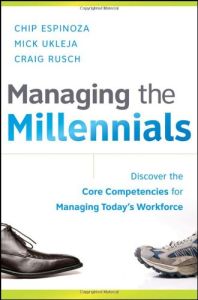
Managing the Millennials
Book

Managing the Millennials

Discover the Core Competencies for Managing Today's Workforce

Wiley, 2010 المزيد...

Buy the book


Editorial Rating

7

getAbstract Rating

  • Concrete Examples
  • For Beginners

Recommendation

Those difficult 20-somethings in your workforce address the CEO by first name, talk out of turn in meetings, and show up late but gladly pull all-nighters. They bristle at your suggestions but thrive on complex challenges. They’re special – that’s what their parents and teachers always told them. They’re the Millennials, complex, multitasking, technologically savvy, exasperating, bright but entitled new employees entering the workforce by the millions. Consultants and professors Chip Espinoza, Mick Ukleja and Craig Rusch offer tactics and strategies for managers confused by this unpredictable generation. Though the authors don’t mind painting this or any other generations with a very broad brush, they still present much useful advice. getAbstract suggests throwing out the rule book and adopting the authors’ nine strategies for getting the most out of your youngest workers.

Summary

Generation Traits and Gaps

Millennials form the “most educated and technologically savvy generation ever.” Their parents sheltered them and gave their lives structure. The US workforce now includes 31 million Millennials, and that number will increase steadily in the next five years. When people of the same age experience high-impact events, they develop a similar mind-set that shapes lifelong perspectives and values.

People born between 1925 and 1945 form the Builders generation and were shaped by The Great Depression, Roosevelt’s presidency, World War II and its aftermath. They respect authority, value a strong work ethic and expect to wait for rewards. Builders often worked for one company their entire careers.

Following the Builders came the Baby Boomers, the more than 80 million Americans born between 1946 and 1964. They experienced the emergence of television and rock and roll, the Vietnam conflict, the civil rights and the women’s movements. For Boomers, work is about accumulating material wealth and creating a professional identity.

Arriving between 1965 and 1977, Generation Xers – 38 million strong – bridge Baby Boomers and Millennials. They grew...

About the Authors

Chip Espinoza teaches leadership seminars and heads GeNext Consulting. Mick Ukleja is founder and president of LeadershipTraQ. Craig Rusch teaches anthropology at Vanguard University in California.


Comment on this summary

  • Avatar
  • Avatar
    J. H. 1 decade ago
    Great summary with some very good insight to how to lead a team of millennials! Get on board quickly or get run over.
  • Avatar
    W. G. 1 decade ago
    This book opens your eyes to the differences in personality and work ethics or the different generations. There is definitely a difference in management styles for the different generations. The Millennial do not need as much direction as the baby boomers. However, they are not as social in the team environments.
  • Avatar
    J. P. 1 decade ago
    I realize that this is a summary of a generalization about millennials, but I feel it is saying that millennials are people we hire to be our children at work. Fortunately, the millennials I work with exhibit the positive attributes expressed in the summary and not the negatives. It's interesting that in one of the other summaries for this month, Managing the Older Employee, Gen Xers are described in much the same way as millennials are in this summary. The other book was written in 2006 and this one in 2010. Interesting how focus has moved from one generation to the next in just a few years, but the views are similar.

More on this topic

Related Skills

Avance na carreira
Seja emocionalmente inteligente
Construa e mantenha o bem-estar
Carreira
Comunique-se de forma eficaz
Desenvolva produtos inovadores
Develop Team Members
Desenvolva a organização
Drive Team Performance
Melhore a experiência do funcionário
Empreendedorismo
Foster Team Culture
Recursos Humanos
Amplie a sua consciência cultural
Inove estrategicamente
Lidere com ética
Lidere a si mesmo
Viva bem
Manage Learning and Development
Gerencie a remuneração
Gestão
Domine habilidades interpessoais
Crescimento pessoal
Promova diversidade, equidade e inclusão
Molde a cultura organizacional
Strengthen Team Collaboration
Compreenda a inovação
Habilidades no ambiente de trabalho
Mantenha o equilíbrio entre vida e trabalho
Practice Transformational Leadership
Promova uma cultura de aprendizagem
Compreenda as microagressões
Encontre significado
Considere outras perspectivas
Cultive uma mentalidade de crescimento
Torne-se um mentorado
Alavanque a ambidestria
Gerencie as suas emoções
Pratique a liderança servidora
Manage People and Talent
Forneça feedback
Defenda novas ideias
Desenvolva suas habilidades de pensamento
Incentive a experimentação
Construa segurança psicológica
Cultive a curiosidade
Lide com pessoas difíceis
Conduza conversas difíceis
Promova a inclusão geracional
Cultive a flexibilidade
Competências comportamentais
Liderança
Recompense as contribuições dos funcionários
Gere novas ideias
Entenda a motivação
Aceite e promova mudanças
Entenda a criatividade
Mentoreie funcionários
Crie estruturas de incentivo
Torne-se mais adaptável
Envelheça bem
Adote um pensamento divergente
Facilite a ideação em grupo
Ofereça arranjos flexíveis de trabalho
Colabore com criatividade
Inovação
Fomente uma cultura de inovação
Seja criativo
Estimule a criatividade