

Book
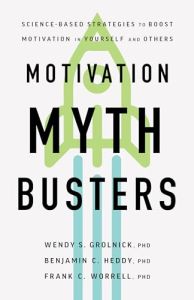
Motivation Myth Busters
Science-Based Strategies to Boost Motivation in Yourself and Others (APA LifeTools Series)
APA,
2024
mais...
Used with permission of American Psychological Association, from Motivation Myth Busters: Science-Based Strategies to Boost Motivation in Yourself and Others by Wendy S. Grolnick, Benjamin C. Heddy and Frank C. Worrell, 1st Edition © 2024; permission conveyed through Copyright Clearance Center, Inc.
ISBN: 9781433841675
Pages: 357
ISBN: 9781433841675
Pages: 357


We currently cannot offer you an audio version of this summary.



Clique com o botão direito no código para copiar a imagem.
Nota: Em um portal em ASP, o link atrás do código é específico do portal!
Recommendation
Why do most New Year’s resolutions fail? Why is it so easy to visualize yourself in a new career and so hard to start one? Why won’t your teenagers clean up their room, no matter how many rewards you offer? The short answers are: Context matters, visualizing success is a waste of time, and rewards don’t work. Professors Wendy S. Grolnick, Benjamin C. Heddy, and Frank C. Worrell debunk popular myths about motivation and offer alternative approaches backed by years of scientific research. They set out to bust these workplace myths to help you boost your employees’ motivation – and then they show you how.
Summary
About the Authors
Wendy S. Grolnick is a professor of psychology at Clark University. Educational psychology professor Benjamin C. Huddy is an associate dean at the University of Oklahoma. Frank C. Worrell is a distinguished professor in the Berkeley School of Education at the University of California.







Comment on this summary