Перейти к содержанию сайта
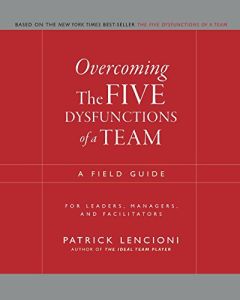
Overcoming the Five Dysfunctions of a Team
Book

Overcoming the Five Dysfunctions of a Team

A Field Guide for Leaders, Managers, and Facilitators

Jossey-Bass, 2005 подробнее...

Buy the book


Editorial Rating

8

getAbstract Rating

  • Comprehensive
  • Applicable
  • Well Structured

Recommendation

Patrick Lencioni wrote this as a follow-up to his 2002 “fable,” The Five Dysfunctions of a Team. It applies the earlier book’s concepts, and suggests many exercises, approaches, examples and explanations you can use as you apply those ideas. If you found the first book useful, you’ll want this one, though you can still get a lot of utility from it even if you haven’t read the original. Lencioni recaps his concepts clearly here, including developing trust among team members and keeping teams focused on their goals. The result is broadly applicable. getAbstract believes that readers who want a basic introduction to improving team function will appreciate this book. That said, those looking for more complex or theoretical approaches, or for tools to deal with specific challenges, such as knowledge management among teams, may need a more advanced manual.

Summary

Teams and Teamwork

Developing good, functional teams doesn’t require any special conceptual breakthroughs, but it does call for “courage and persistence.” Commit to making your team function smoothly, and then convince the other members that your dedication is real and they should share it. In the process of developing your team, make sure that you address several common misunderstandings and “five dysfunctions”: distrust, conflict, lack of commitment, lack of accountability and a failure to focus on results.

Start with the basics: Is your group a team? It doesn’t have to be. Many groups think they’re teams when they aren’t, and that misconception can frustrate people and waste time. A team must share goals and work toward them together. This requires some mutual performance evaluation. Team members must be willing to subordinate their personal needs to those of the team. True teams are “relatively small”; they might have as many as 12 people or as few as three. To build a strong and healthy team, address these five crucial issues:

1. “Building Trust”

Many people misuse the term “team” and disagree about the meaning of trust. Trust doesn’t mean being...

About the Author

Patrick Lencioni, founder and president of a management consulting firm, has worked with Fortune 500 senior executives and high-tech startup companies. He is the author of several other books, including The Five Dysfunctions of a Team and Death by Meeting.


Comment on this summary

More on this topic

Related Skills

AI Transformation
Seja criativo
Torne-se mais adaptável
Torne-se mais produtivo
Construa e mantenha o bem-estar
Construa confiança
Comunique-se de forma eficaz
Transformação digital
Drive AI Transformation
Enhance Cybersecurity
Fomente uma cultura de inovação
Recursos Humanos

Inovação

Lidere com ética
Viva bem
Tome boas decisões
Gerencie mudanças
Gerencie relações trabalhistas
Manage Learning and Development
Gestão
Crescimento pessoal
Planeje e estrategize as suas vendas
Promova diversidade, equidade e inclusão

Vendas
Molde a cultura organizacional
Reforce o seu alfabetismo digital
Habilidades no ambiente de trabalho
Supere desafios
Questione suposições
Construa uma cultura inclusiva
Defina e alcance metas
Build Security Culture
Drive AI Adoption in Teams
Demonstre empatia e compaixão
Colabore virtualmente
Supere a autocrítica
Gerencie as suas emoções
Comunique-se com transparência
Cultive a positividade
Facilite discussões
Facilite a ideação em grupo
Combata microagressões
Colabore com criatividade
Pratique a liderança servidora
Considere outras perspectivas
Garanta a prestação de contas na equipe
Navigate Leadership Challenges
Estabeleça metas para a equipe
Defina papéis
Forneça feedback
Seja emocionalmente inteligente
Delegue com eficácia
Aprimore a agilidade da equipe
Incentive a comunicação aberta
Incentive a colaboração
Liderança
Decida em grupo
Colabore entre funções diversas
Lidere durante mudanças
Gerencie a comunicação da equipe
Seja autêntico
Tenha reuniões produtivas
Lidere a si mesmo
Develop Team Members
Navegue a política corporativa
Entenda a motivação
Lidere equipes híbridas ou remotas
Gerencie equipes e departamentos
Crie um senso de pertencimento
Lidere com inclusão
Incentive a experimentação
Promova a tolerância ao erro
Compreenda a si mesmo
Competências comportamentais
Estimule a responsabilidade nas pessoas
Domine a colaboração
Desenvolva autoconsciência
Cultive uma mentalidade de crescimento
Apoie e ajude outras pessoas
Faça perguntas
Gerencie o seu impacto como líder
Melhore o desempenho da equipe
Motive a sua equipe
Manage People and Talent
Practice Transformational Leadership
Compreenda tipos de personalidade
Conduza conversas difíceis
Assuma a responsabilidade pessoal
Construa segurança psicológica
Resolva conflitos com habilidade
Pratique a humildade
Gerencie equipes de vendas
Lide com pessoas difíceis
Gerencie limites da equipe
Domine habilidades interpessoais
Entenda a dinâmica da equipe
Fortaleça a coesão da equipe
Strengthen Team Collaboration
Foster Team Culture
Conquiste a confiança das pessoas
Drive Team Performance
Permita-se ser vulnerável