

Article
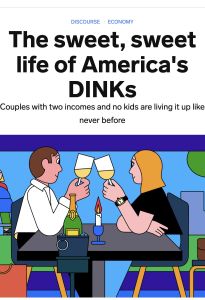
The Sweet, Sweet Life of America’s Dinks
Couples with two incomes and no kids are living it up like never before
Business Insider UK,
2024



Clique com o botão direito no código para copiar a imagem.
Nota: Em um portal em ASP, o link atrás do código é específico do portal!
Recommendation
Business Insider’s Juliana Kaplan and Bartie Scott report on the emergence of a new social trend: dual-income couples with no kids (DINKs) have become a subgroup who can still afford the American Dream, in stark contrast to parents who face rising child care costs. With the social stigma of being child-free lessening since the 1970s, this lifestyle is becoming “aspirational” for younger people, as evident on social media. Even in the current economic landscape, couples without kids have an easier path to achieving a financially secure life now and through old age while enjoying varied and rich experiences – except parenthood.
Summary
About the Authors
Both authors are on the economy team at Business Insider, where Juliana Kaplan is a senior labor and inequality reporter, and Bartie Scott is a deputy editor.

Comment on this summary