Перейти к содержанию сайта
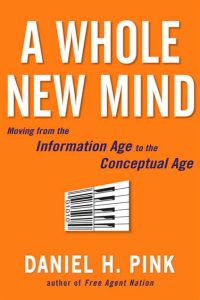
A Whole New Mind
Book

A Whole New Mind

Moving from the Information Age to the Conceptual Age

Riverhead, 2005 подробнее...

Buy the book


Editorial Rating

8

Recommendation

This fun, exciting read suggests many ways to develop your "right-brain" thinking - the kind of relationship-based thought patterns that author Daniel Pink argues will be essential in the emerging "Conceptual Age." Pink draws examples from numerous disciplines, industries and locations. The result is thought-provoking and applicable. getAbstract recommends this work to individuals and companies committed to change and open to originality; its tools will raise your capacities. Pink’s reasoning about the forces shaping this new age is striking in its simple rigor, as are the questions he offers that let you check how ready you and your business are for the economy that is emerging. His emphasis on the positive is the book’s one weakness. He doesn’t really address how trauma or turmoil would affect the driving forces of the Conceptual Age. Also, he only briefly touches upon those aspects of business where right brain thinking is hard to apply. What’s here is good, but what’s left out is somewhat troubling.

Summary

From the Information Age to the "Conceptual Age"

The way some people talk about it, you’d think you have two brains, a "right brain" and a "left brain" - and depending on who is talking, one is good and one is bad. Of course, both are good and highly necessary. They are different hemispheres of the same brain, with different functions, but the ideal is for them to work together.

A few things are true about the division in your brain. First, the left brain controls the right side of the body. Second, the left is better at sequential thinking, while the right is better at simultaneous thinking. That means your left brain is stronger at recognizing individual symbols, but your right brain processes items where the whole composition is crucial, such as facial recognition. Third, while your left brain focuses on the text, the right focuses on the context. Your left brain handles the literal meaning of a spoken message, but the right tunes in to nuance and connotation. Fourth, your left brain focuses on details while your right brain puts them together into a larger picture.

Why does this matter? It matters because you’ve been living through a transformation that parallels...

About the Author

Daniel H. Pink is a contributing editor for Wired magazine. He has written on social trends for print and electronic venues, and is the author of Free Agent Nation.


Comment on this summary

More on this topic

Related Skills

Развивайте эмоциональный интеллект
Научитесь адаптироваться к переменам
Превратите потенциальных клиентов в реальных
Разрабатывайте инновационные продукты
Предпринимательство
Формируйте культуру инноваций
Foster Team Culture
Управление персоналом
Руководите согласно нормам этики
Живите полной жизнью
Личностный рост
Продажи
Изучите тему создания инноваций
Навыки для работы
Manage People and Talent
Рассматривайте другие точки зрения
Поддерживайте личное благополучие
Заслужите доверие потенциальных клиентов
Обретите смысл
Управляйте своим обучением
Выработайте установку на рост
Лидерство
Научитесь понимать себя
Управляйте собой
Инновации
Поощряйте креативность
Применяйте дизайн-мышление
Совместно ищите творческие решения
Изучите типы личности
Воспитывайте любознательность
Не скрывайте уязвимость
Освойте метод дивергентного мышления
Изучите тему креативности
Развивайте навыки мышления
Развивайте самоосознание
Софт-скиллз
Практикуйте лидерство-служение
Применяйте творческий подход
Освойте навыки межличностного общения
Проявляйте эмпатию