
Перейти к содержанию сайта
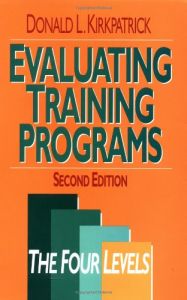
Evaluating Training Programs
Book

Evaluating Training Programs

The Four Levels

Berrett-Koehler, 1998 подробнее...

Buy the book


Editorial Rating

9

getAbstract Rating

  • Innovative
  • Applicable

Recommendation

Donald L. Kirkpatrick presents a system for evaluating the effectiveness of a training program. The system assesses four types of information: the reactions of the participants, the learning they achieved, changes in their behavior, and the final business results (such as increased production, improved quality, decreased costs, or higher profits). This solid, organized approach to evaluation includes guidelines, sample questionnaires, charts and formulas, as well as case studies of companies using this approach. However, because it is fairly dry and technical, this book primarily will interest those who run or rely upon training programs. The summaries of the first chapters - covering the evaluation system - can provide managers and executives with a general idea of this approach and the research involved. But getabstract particularly recommends this book to those leading training programs, because they can use its specific material as a reference when undertaking evaluations.

Summary

The Ten-Step Evaluation Process

You need the ability to evaluate training programs to determine their effectiveness. Upper-level executives and training managers must be able to make decisions based on whether or not a program worked. To end up with a solid training program, consider these 10 factors when you are planning and implementing training:

  • Determine needs - Using interviews or a survey, ask potential participants, their bosses and others familiar with the job what they need to know. Test the participants, or analyze their performance appraisal forms. With a survey, participants can quickly indicate their level of need for training on a particular subject. Compile these sums and create a weighted score for each category. Use this data to help you decide what training programs to establish. An advisory committee can help you decide what to cover. Keep them posted on evaluation results to deepen their knowledge and ability to help you.
  • Set objectives - Once you know what the needs are, establish objectives for the program according to the results you want, such as improvements in production, sales, quality, turnover, absenteeism, morale, quality ...

About the Author

Donald L. Kirkpatrick is a former national president of the American Society for Training and Development. He regularly conducts evaluation workshops. He has consulted on management training and development for companies including Blockbuster, Coca-Cola, Eastman Kodak, GE, and IBM. His previous books include How to Train and Develop Supervisors and How to Manage Change Effectively.


Comment on this summary

More on this topic

Related Skills

AI Transformation
Управляйте своим обучением
Цифровая трансформация
Отрасль консалтинга
Сектор образования
Enable Digital Organization
Улучшайте опыт сотрудников
Высшее руководство
Управление персоналом
Инновации
Осуществляйте стратегическое руководство
Лидерство
Leverage AI for HR
Manage People and Talent
Управляйте производительностью
Управляйте командами и отделами
Менеджмент
Анализ отраслевых рынков
Повышайте производительность персонала
Личностный рост
Изучите тему создания инноваций
Изучите тему организаций
Развивайте лидеров
Develop Team Members
Проводите аттестации
Повышайте вовлеченность сотрудников
Лучшие практики сектора образования
Лучшие практики отрасли консалтинга
Повышайте организационную эффективность
Use AI for Learning & Development
Manage Learning and Development
Формируйте учебные ресурсы
Изучите тему организационного обучения
Внедряйте коучинг высших руководителей
Переобучайте и повышайте квалификацию
Внедряйте программы наставничества
Используйте технологии L&D
Измеряйте влияние L&D на результаты
Внедряйте программы коучинга
Изучите тему обучения
Внедряйте программы обучения