
Перейти к содержанию сайта
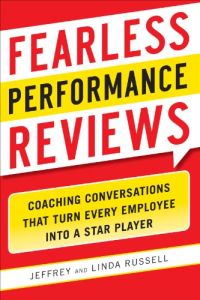
Fearless Performance Reviews
Book

Fearless Performance Reviews

Coaching Conversations that Turn Every Employee into a Star Player

McGraw-Hill, 2013 más...

Buy the book


Editorial Rating

7

getAbstract Rating

  • Applicable

Recommendation

Performance reviews shape employees’ pay and promotions and affect their sense of self-worth. Managers detest performance reviews and have as much on the line as their staffers due to their overall responsibility for performance. The way most companies structure performance reviews brings out the worst in everybody. The more managers turn into posturing “my-way-or-the-highway” dictators, the more employees become surly, defensive obstructionists who feel threatened by evaluations they reject. Fortunately, you can take a better path to performance reviews by facilitating “performance-coaching conversations,” instead. Organizational experts Jeffrey and Linda Russell explain how to conduct performance reviews that actually improve performance. Their “fearless performance review” construct is a solid contribution to this process, even if some steps still sound a little scary. getAbstract recommends this productive path to those charged with review policy, HR professionals, and all supervisors and managers.

Summary

Reviewing Performance Reviews

Everyone hates performance reviews – the employees who face them and the managers who administer them. The biggest problem is performance reviews’ confrontational structure and judgmental style. Often, these reviews generate stressful conversations that make everyone uncomfortable; they stifle honest and open communication between supervisors and employees.

Because of performance reviews’ negative, pain-inducing structure, managers often delay them as long as possible. And staffers under review often quickly become defensive. They worry about their managers’ judgments and how the review’s findings will affect their status and remuneration.

Performance reviews are a fairly new phenomenon. They became popular during World War II as a result of the pioneering work of Fredrick Taylor, the father of “scientific management.” Taylor believed that employees could not be trusted to take charge of their own work. He told companies that managers should control the planning of all employees’ work activities. Most companies subsequently organized their workflow in adherence with Taylor’s principles. They instituted performance reviews in the...

About the Authors

Jeffrey and Linda Russell are principals of Russell Consulting Inc. and the authors of nine other books, including Leading Change Training and Strategic Planning Training.


Comment on this summary

More on this topic

Related Skills

Применяйте творческий подход
Развивайте эмоциональный интеллект
Научитесь адаптироваться к переменам
Повышайте свою продуктивность
Эффективно общайтесь
Создайте бизнес-план
Develop Team Members
Предпринимательство
Высшее руководство
Формируйте культуру инноваций
Управление персоналом
Инновации
Руководите согласно нормам этики
Осуществляйте стратегическое руководство
Живите полной жизнью
Принимайте оптимальные решения
Руководите людьми в периоды перемен
Manage Learning and Development
Управляйте командами и отделами
Менеджмент

Повышайте производительность персонала
Стратегически подбирайте должностные роли
Проводите политику DEI
Формируйте организационную культуру
Повышайте цифровую грамотность
Навыки для работы
Внедряйте программы коучинга
Улучшайте опыт сотрудников
Оценивайте сотрудников
Подвергайте сомнению предположения
Повышайте производительность команды
Сотрудничайте удаленно
Изучите тему организационных изменений
Укрепляйте чувство принадлежности к команде
Научитесь вести разговор
Navigate Leadership Challenges
Управляйте своим влиянием лидера
Личностный рост
Умейте общаться с трудными людьми
Освойте навыки сотрудничества
Сохраняйте позитивный настрой
Drive Team Performance
Будьте инклюзивным лидером
Подходите к общению стратегически
Управляйте трудными разговорами
Задавайте нужные вопросы
Мотивируйте членов команды
Освойте метод дивергентного мышления
Ставьте цели и достигайте их
Поощряйте эксперименты
Совместно ищите творческие решения
Принимайте коллективные решения
Повышайте организационную эффективность
Лидерство
Сотрудничайте с другими отделами
Проявляйте эмпатию
Воспитывайте терпимость к неудачам
Управляйте собой
Стимулируйте командную выработку идей
Будьте искренни
Foster Team Culture
Поставьте бизнес-цели
Стимулируйте дискуссии
Ориентируйтесь в офисной политике
Научитесь понимать себя
Развивайте восприимчивость к коучингу
Поощряйте открытость в общении
Practice Transformational Leadership
Умейте поддержать людей
Manage People and Talent
Предоставляйте обратную связь
Устанавливайте стандарты эффективности
Ставьте командные цели
Софт-скиллз
Придерживайтесь прозрачности в общении
Развивайте самоосознание
Управляйте производительностью
Освойте навыки межличностного общения
Рассматривайте другие точки зрения
Стимулируйте сотрудничество
Практикуйте лидерство-служение
Strengthen Team Collaboration
Проводите аттестации
Укрепляйте психологическую безопасность

Выработайте установку на рост
Будьте скромны
Не скрывайте уязвимость