

Book
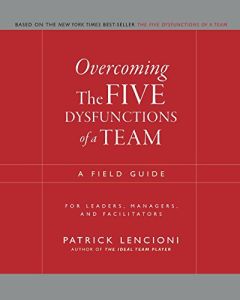
Overcoming the Five Dysfunctions of a Team
A Field Guide for Leaders, Managers, and Facilitators


1×
Войдите, чтобы прослушать аудиоверсию краткого изложения.



Щелкнете правой кнопкой мыши на QR-код, чтобы скопировать изображение.
Внимание: на ASP-портале ссылка, представленная QR-кодом, уникальна для каждого корпоративного портала.
Recommendation
Patrick Lencioni wrote this as a follow-up to his 2002 “fable,” The Five Dysfunctions of a Team. It applies the earlier book’s concepts, and suggests many exercises, approaches, examples and explanations you can use as you apply those ideas. If you found the first book useful, you’ll want this one, though you can still get a lot of utility from it even if you haven’t read the original. Lencioni recaps his concepts clearly here, including developing trust among team members and keeping teams focused on their goals. The result is broadly applicable. getAbstract believes that readers who want a basic introduction to improving team function will appreciate this book. That said, those looking for more complex or theoretical approaches, or for tools to deal with specific challenges, such as knowledge management among teams, may need a more advanced manual.
Summary
About the Author
Patrick Lencioni, founder and president of a management consulting firm, has worked with Fortune 500 senior executives and high-tech startup companies. He is the author of several other books, including The Five Dysfunctions of a Team and Death by Meeting.
By the same author
Learners who read this summary also read
Related Skills

Лидерство

Укрепить командное сотрудничество

Формируйте культуру инноваций

Управление персоналом

Инновации

Управляйте собой

Управляйте отношениями с сотрудниками

Управляйте командами и отделами

Менеджмент

Освойте навыки сотрудничества

Освойте навыки межличностного общения

Навигируйте лидерскими вызовами

Личностный рост

Проводите политику DEI

Софт-скиллз

Навыки для работы

Стимулируйте дискуссии

Не скрывайте уязвимость

Повышайте производительность команды

Укрепляйте чувство принадлежности к команде

Разрешайте конфликты

Содействуйте командной культуре

Мотивируйте членов команды

Берите на себя личную ответственность

Научитесь завоевывать доверие

Управляйте командной эффективностью

Сплачивайте команду

Изучите тему групповой динамики

Обеспечивайте подотчетность команды

Укрепляйте психологическую безопасность

Comment on this summary