
Перейти к содержанию сайта
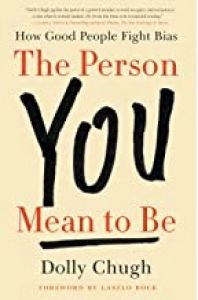
The Person You Mean to Be
Book

The Person You Mean to Be

How Good People Fight Bias

HarperCollins, 2018 подробнее...

Buy the book


Editorial Rating

9

getAbstract Rating

  • Applicable
  • Eye Opening
  • Inspiring

Recommendation

Most people want to be good people. Yet often, being seen as a good person can become more important than actually being a good person. When this happens, your efforts to make a positive difference in the world can backfire. At a time when inclusion and diversity have become mainstream topics, social psychologist Dolly Chugh demonstrates how uncovering your hidden motives and adopting a growth mindset will help you to act as a builder, rather than just a believer, in the fight against discrimination and inequality.

Summary

You need a growth mindset to thrive in situations that threaten your identity.

Research shows that the way you see yourself – your identity – directs your actions more than any particular set of values. Consequently, your brain considers any behavior that contradicts your sense of identity as a self-threat, and tries to find ways to dismiss, ignore or justify it. This is particularly true if you consider yourself to be a “good” person. To see yourself more clearly, think of yourself as someone who “is trying to be better” instead. This allows you to move from a fixed mindset to a growth mindset, which opens you up to learning.

If you have a fixed mindset, you’ll perceive criticism, anger or push-back as a threat. Your brain will switch immediately into defensive mode and dismiss criticism: You don’t learn. In contrast, if you have a growth mindset, you are likely to embrace information that will help you understand the reasons that might have caused the criticism or anger. Notably, situations where psychological safety is low – where people feel they will face shame or punishment for expressing innovative...

About the Author

Dolly Chugh is an award-winning social psychologist and associate professor of management and organization at the Stern School of Business at New York University.


Comment on this summary

More on this topic

Related Skills

Применяйте творческий подход
Развивайте эмоциональный интеллект
Научитесь адаптироваться к переменам
Поддерживайте личное благополучие
Укрепляйте уверенность в себе
Эффективно общайтесь
Развивайте навыки мышления
Высшее руководство
Foster Team Culture
Управление персоналом
Повышайте культурную компетентность
Лидерство
Освойте навыки межличностного общения
Личностный рост
Софт-скиллз
Understand Economics
Навыки для работы
Поддерживайте представителей меньшинств
Укрепляйте чувство принадлежности к команде
Поддерживайте этническую инклюзивность
Повышайте психологическую устойчивость
Противодействуйте микроагрессии
Изучите тему дискриминации
Развивайте навыки самоконтроля
Нанимайте разнообразные таланты
Рассматривайте другие точки зрения
Проводите политику DEI
Поддерживайте гендерную инклюзивность
Поддерживайте инклюзивность лиц с ОВЗ
Не скрывайте уязвимость
Преодолевайте трудности
Избавьтесь от синдрома самозванца
Поддерживайте социальную инклюзивность
Научитесь понимать себя
Управляйте собой
Подвергайте сомнению предположения
Проводите политику разнообразия
Изучите тему структурного неравенства
Развивайте самоосознание
Изучите тему микроагрессии
Неравенство
Предупреждайте когнитивные искажения
Придерживайтесь инклюзивности в общении
Будьте инклюзивным лидером
Выработайте установку на рост
Формируйте культуру инклюзивности
Изучите тему неосознанной предвзятости