
Skip navigation
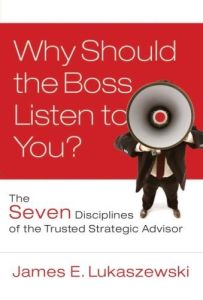
Why Should the Boss Listen to You?
Book

Why Should the Boss Listen to You?

The Seven Disciplines of the Trusted Strategic Advisor

Jossey-Bass, 2008 more...

Buy the book


Editorial Rating

5

getAbstract Rating

  • Applicable
  • Well Structured
  • Overview

Recommendation

Crisis management and PR consultant James E. Lukaszewski offers some guidance to people who want to make a career out of advising CEOs and other key executive managers. The author practices what he preaches by keeping the book focused, positive and concise. In the first part, he teaches you what matters to CEOs, why and how they think, and how to become an asset to their work. In the second part of the book, Lukaszewski devotes a chapter to each of the seven traits a successful CEO adviser needs. The list covers a combination of personal traits, patterns of thought, and skill at communicating with executives. This book will be most useful in helping you break away from a staff view of your company, so you can learn to evaluate situations from a CEO’s perspective. getAbstract thinks this outlook will be useful to anyone who wants to be an effective adviser.

Summary

How CEOs Succeed or Fail

If you want CEOs and other top executives to listen to your advice, start by understanding their needs. They don’t require advice from a staff perspective. You must develop expertise far beyond that and come to understand the issues the entire company faces. CEOs need advisers to help with the dynamics of dealing with a board of directors. And CEOs have to be comfortable with ambiguity. Chief executives can change the direction of their companies only incrementally. Most CEOs have to deal with corporate inertia and must settle for changing things an inch at a time.

CEOs focus on tomorrow and the day after rather than on yesterday or what might happen in the distant future. They state the corporate vision, and then encourage, cheerlead, direct and organize the company to work toward it. If they do not deliver, overstate their accomplishments, don’t get people behind them, get caught up in minutiae or mired down in one issue, they fail. To succeed, CEOs must focus their people on fulfilling a clear vision laid out as a limited number of significant but achievable objectives. CEOs must accomplish immediate goals before they can move on to longer...

About the Author

James E. Lukaszewski is a strategic adviser and head of The Lukaszewski Group. He consults with companies on crisis management and PR issues.


Comment on this summary

  • Avatar
  • Avatar
    J. S. 1 decade ago
    the section on the final page - section 6 Advise Constructively and the 3 minute drill make this abstract worth reading. In a world of soundbites and limited time to get your point across this is really helpful. I will update further when I have 'given it a go'

More on this topic

Related Skills

Be Emotionally Intelligent
Become a Self-Driven Learner
Become More Adaptable
Become More Productive
Build and Maintain Well-Being
Build Confidence
Corporate Finances
Develop Team Members
Develop Your Thinking Skills
Finance Industry
Drive Team Performance
Foster a Culture of Innovation
Foster Team Culture
Generate and Qualify Leads
Human Resources
Innovation
Lead Ethically
Lead Operational Planning
Make Good Decisions
Manage Financial Risks
Manage Learning and Development
Manage People and Talent
Manage Risk
Manage Teams and Departments
Management
Market Insights by Industry
Master Collaboration
Plan Financial Performance
Promote Diversity, Equity, and Inclusion
Sales
Search for a Job
Strengthen Team Collaboration
Understand Innovation
Workplace Skills
Master Forecasting
Soft Skills
Support Others
Think Critically
Master Systems Thinking
Future of Finance Industry
Manage Your Emotions
Take Personal Accountability
Develop Your Personal Brand
Become a Mentee
Manage Change
Manage Your Leadership Impact
Cultivate Curiosity
Future of Work
Navigate Difficult Conversations
Support Team Members’ Careers
Facilitate Group Ideation
Leadership
Navigate Leadership Challenges
Act Ethically
Facilitate Discussions
Understand Organizational Change
Understand Organizations
Lead Yourself
Persuade Effectively
Set and Achieve Goals
Ask Questions
Plan Your Career
Learn from Feedback
Overcome Challenges
Advance Your Career
Leverage Your Strengths
Practice Servant Leadership
Personal Growth
Practice Humility
Communicate Effectively
Build Psychological Safety
Lead Strategically
Master Interpersonal Skills
Manage Up
Practice Transformational Leadership
Innovate Strategically
Plan Strategically
Develop Self-Awareness
Manage Your Personal Reputation
Communicate Strategically
Understand Yourself
Build Your Presence
Coach People
Provide Feedback
Master Public Speaking
Career
Implement Executive Coaching
Learn from Experience
Communicate Corporate Strategy
Mentor Employees
Translate Strategy into Action
Navigate Office Politics
Think Strategically
Be Authentic
Gain People's Trust
Executive Leadership