

Report
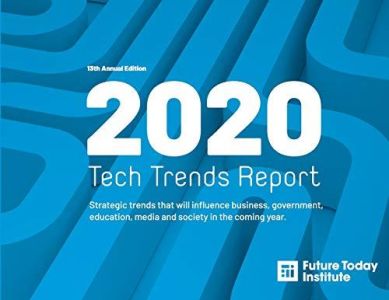
2020 Tech Trends Report
Strategic trends that will influence business, government, education, media and society in the coming year (13th Edition)
Future Today Institute,
2020



摘要提供范围:全球
扫码即可阅读分享此浓缩书
Recommendation
Leaders in politics, innovation and business pay more attention to the future than ever before. Fast-moving technological advances generate so much disruption that building strategy can be difficult. With the Future Today Institute’s 2020 Tech Trends Report, leaders can make more sound decisions about how to invest, grow their business and support their teams. The “quantitative futurists” at FTI cover a broad scope and design their insights for laypeople. Recurring themes are big tech’s expansion into the public sector, data ownership and better regulations in what is increasingly a surveillance state. The FTI’s report can help leaders in business, the sciences and policy making build the future, today.
Summary
About the Author
Amy Webb is professor of strategic foresight at the NYU Stern School of Business. She is a quantitative futurist, founder of the Future Today Institute and author of The Signals Are Talking: Why Today’s Fringe Is Tomorrow’s Mainstream and The Big Nine: How The Tech Titans and Their Thinking Machines Could Warp Humanity. Marc Palatucci is a senior foresight analyst and associate with the Future Today Institute. He specializes in technology, culture and business.
By the same author
Learners who read this summary also read
Related Skills

发现人工智能的应用案例,识别商业中潜在的人工智能应用,探索人工智能在工作场所改进中的可能性,分析人工

科技行业

高管领导力

利用人工智能制定商业战略,战略性地将人工智能融入商业计划,制定以人工智能驱动的企业战略,评估人工智能

在日常任务中利用人工智能,将人工智能工具整合到工作流程中,使用人工智能自动化重复性任务,利用人工智能

行业市场洞察

理解人工智能,向同事解释基本的人工智能概念,区分人工智能与传统软件解决方案,总结人工智能在现代工作场

职场技能

科技行业未来

使用人工智能进行数据分析,实施人工智能以增强数据洞察,将人工智能集成到数据处理任务中,利用人工智能工

发现科技行业中的人工智能应用案例,应用机器学习于科技行业,利用人工智能推动技术创新,识别科技中的人工

理解人工智能对工作的影响,评估人工智能对日常任务的影响,评估人工智能驱动的工作场所变化,识别人工智能

使用人工智能进行市场分析,实施人工智能工具进行市场趋势分析,利用人工智能驱动的洞察评估市场变化,利用

了解人工智能对商业和经济的影响,分析人工智能对市场动态的影响,评估人工智能驱动的行业战略变化,评估人

发现最新的人工智能进展,跟踪最新的人工智能技术趋势,识别突破性的人工智能研究发展,探索前沿的人工智能

人工智能转型,实施基于人工智能的流程优化,跨部门整合人工智能解决方案,评估企业采用人工智能的准备情况

Comment on this summary