

跳过导航
Dealing with the Tough Stuff
Book

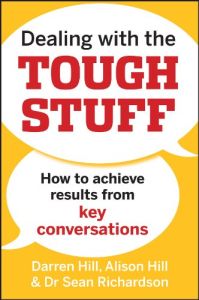
Dealing with the Tough Stuff

How to Achieve Results from Key Conversations

Wiley, 2012 更多详情

Buy the book


Editorial Rating

8

getAbstract Rating

  • Applicable

Recommendation

Behavioral scientist Darren Hill and psychologists Alison Hill and Sean Richardson explain that behaviors are difficult, but people aren’t, at least, not most people. To show leaders how to handle difficult workplace conversations, the authors discuss verbal and nonverbal communication, restructuring, termination, crisis management, and more. Their advice is succinct and to the point. They give managers the nitty-gritty on handling difficult behaviors without pop psychology fluff. Their practical suggestions include using three-point communication to defuse tense situations and cultivating a growth mind-set for handling crises. The authors lighten the mood with clever, alliterative chapter titles, while delivering tough, workable advice. You’ll appreciate the layout, charts, diagrams, brief examples and useful lists – all good stuff, and not just tough stuff. getAbstract recommends this perceptive book to managers, teachers, parents and other leaders.

Summary

“Foundational Skills”

Managers with staying power learn to tackle personnel problems head-on, but to do that, you have to be prepared. Ask yourself if you address misunderstandings immediately or ignore them. Are you aware of how nonverbal communication affects “tough” conversations? How well do you deal with anger? Can people manipulate you by being emotional? Are you confident in your ability to manage difficult, big-picture moments, such as layoffs or restructurings? How would you respond during a crisis? The answers to these questions can reveal where you must improve so you can manage tough discussions effectively.

To figure out why people behave as they do, use the “ABC model,” that is, consider the “Antecedents, Behavior” and “Consequences.” An antecedent is “what comes before” – what led to a problematic behavior. Behavior is what a person does. Consequences are events that result from behavior. Most behaviors have multiple antecedents and consequences. You can help your employees modify their behaviors once they understand what drives the way they act. People generally don’t change a behavior without a reason. For example, a hard worker who suddenly starts...

About the Authors

Behavioral scientist Darren Hill is a popular speaker in Australia and leads the Tough Stuff workshops. Blogger, trainer and consultant Alison Hill is a registered psychologist, as is Sean Richardson, a former world-class athlete who specializes in high performance psychology.



Comment on this summary

More on this topic

Related Skills

变得更加适应变化
建立和维护福祉
转化潜在客户
Develop Team Members
Drive Team Performance
培养创新文化
Foster Team Culture
人力资源
创新
以德领导
战略性领导
健康生活
管理企业沟通
Manage Learning and Development
管理绩效
管理风险
管理团队和部门
管理
市场营销
精通协作
优化劳动力绩效
个人成长
制定战略规划
促进多样性、公平与包容
销售
塑造组织文化
Strengthen Team Collaboration
理解组织运作
职场技能
勇于脆弱
善于倾听
设定边界
精通公共演讲
理解团队动态
培养有益习惯
解雇员工
改善心理健康
建立客户关系
现场演讲
培养成长型思维
Understand Organizational Behavior
战略沟通
理解情绪
拥抱挑战
管理变革
Work Remotely
高效分配任务
培养积极心态
变革中领导
提升员工体验
实践服务型领导
提出问题
提升韧性
展现同理心与关怀
实施纪律处分
了解自我
Practice Transformational Leadership
促进开放沟通
领导自我
管理团队沟通
管理上级
理解动机
应对不确定性
设定绩效标准
发展自我意识
透明沟通
进行绩效评估
擅长对话
建立心理安全感
理解沟通
有效沟通
高管领导力
提升情商
管理情绪
管理领导影响力
提供反馈
化解冲突
理解人类行为
确保业务连续性
管理员工关系
克服挑战
促进讨论
构建个人影响力
调整沟通风格
领导力
危机沟通管理
精通人际关系技巧
处理棘手人际关系
软技能
Navigate Leadership Challenges
应对职场政治
Manage People and Talent
管理危机
应对困难对话
识别社交线索
清晰表达
危机中领导
非言语沟通