
Skip navigation
Fearless Performance Reviews
Book

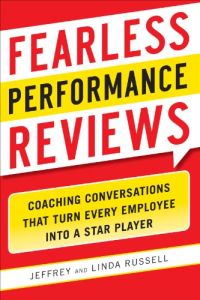
Fearless Performance Reviews

Coaching Conversations that Turn Every Employee into a Star Player

McGraw-Hill, 2013 more...

Buy the book


Editorial Rating

7

getAbstract Rating

  • Applicable

Recommendation

Performance reviews shape employees’ pay and promotions and affect their sense of self-worth. Managers detest performance reviews and have as much on the line as their staffers due to their overall responsibility for performance. The way most companies structure performance reviews brings out the worst in everybody. The more managers turn into posturing “my-way-or-the-highway” dictators, the more employees become surly, defensive obstructionists who feel threatened by evaluations they reject. Fortunately, you can take a better path to performance reviews by facilitating “performance-coaching conversations,” instead. Organizational experts Jeffrey and Linda Russell explain how to conduct performance reviews that actually improve performance. Their “fearless performance review” construct is a solid contribution to this process, even if some steps still sound a little scary. getAbstract recommends this productive path to those charged with review policy, HR professionals, and all supervisors and managers.

Summary

Reviewing Performance Reviews

Everyone hates performance reviews – the employees who face them and the managers who administer them. The biggest problem is performance reviews’ confrontational structure and judgmental style. Often, these reviews generate stressful conversations that make everyone uncomfortable; they stifle honest and open communication between supervisors and employees.

Because of performance reviews’ negative, pain-inducing structure, managers often delay them as long as possible. And staffers under review often quickly become defensive. They worry about their managers’ judgments and how the review’s findings will affect their status and remuneration.

Performance reviews are a fairly new phenomenon. They became popular during World War II as a result of the pioneering work of Fredrick Taylor, the father of “scientific management.” Taylor believed that employees could not be trusted to take charge of their own work. He told companies that managers should control the planning of all employees’ work activities. Most companies subsequently organized their workflow in adherence with Taylor’s principles. They instituted performance reviews in the...

About the Authors

Jeffrey and Linda Russell are principals of Russell Consulting Inc. and the authors of nine other books, including Leading Change Training and Strategic Planning Training.



Comment on this summary

More on this topic

Related Skills

发挥创意
提升情商
变得更加适应变化
提高工作效率
有效沟通
制定商业计划
Develop Team Members
创业
高管领导力
培养创新文化
人力资源
创新
以德领导
战略性领导
健康生活
做出明智决策
管理变革
Manage Learning and Development
管理团队和部门
管理
优化劳动力绩效
战略性安置人才
促进多样性、公平与包容
塑造组织文化
增强数字素养
职场技能
实施辅导项目
提升员工体验
评估员工
挑战假设
提升团队表现
虚拟协作
变革中领导
营造归属感
擅长对话
Navigate Leadership Challenges
管理领导影响力
个人成长
处理棘手人际关系
精通协作
培养积极心态
Drive Team Performance
包容性领导
战略沟通
应对困难对话
提出问题
激励团队
拥抱发散性思维
设定并达成目标
鼓励实验精神
创造性协作
进行团队决策
提升组织绩效
领导力
跨部门协作
展现同理心与关怀
促进容错文化
领导自我
促进小组创意
保持真实
Foster Team Culture
设定商业目标
促进讨论
应对职场政治
了解自我
愿意接受指导
促进开放沟通
Practice Transformational Leadership
支持他人
Manage People and Talent
提供反馈
设定绩效标准
设定团队目标
软技能
透明沟通
发展自我意识
管理绩效
精通人际关系技巧
换位思考
促进协作
实践服务型领导
Strengthen Team Collaboration
进行绩效评估
建立心理安全感
培养成长型思维
谦逊为人
勇于脆弱