

Article
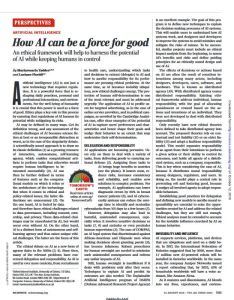
How AI Can Be a Force for Good
An ethical framework will help to harness the potential of AI while keeping humans in control
Science,
2018



扫码即可阅读分享此浓缩书
Recommendation
Would the world be a different place if people in the 19th century had been able to foresee the industrial revolution’s devastating impact on the environment? Of course, no one will ever know the answer, but people can try to do better when it comes to the technological revolution that is taking the 21st century by storm: Artificial Intelligence (AI). In a Science magazine article, Mariarosaria Taddeo and Luciano Floridi discuss the importance of developing ethical guidelines to pre-empt the potential negative consequences of AI. The article will engage anyone concerned with the social and ethical impact of AI.
Summary
About the Authors
Mariarosaria Taddeo and Luciano Floridi are experts at the Oxford Internet Institute and the Alan Turing Institute in the UK.
Learners who read this summary also read
Related Skills

人工智能转型,实施基于人工智能的流程优化,跨部门整合人工智能解决方案,评估企业采用人工智能的准备情况

推动人工智能转型,在各部门实施人工智能转型,协调与利益相关者的人工智能倡议,监督人工智能技术的整合,

领导力

利用人工智能提升领导力,将人工智能洞察融入领导决策,使用人工智能工具增强领导战略,通过人工智能分析推

在日常任务中利用人工智能,将人工智能工具整合到工作流程中,使用人工智能自动化重复性任务,利用人工智能

理解人工智能,向同事解释基本的人工智能概念,区分人工智能与传统软件解决方案,总结人工智能在现代工作场

职场技能

了解人工智能风险,识别商业中的人工智能风险因素,评估人工智能故障的影响,评估人工智能系统中的潜在偏见

建立人工智能治理,定义人工智能治理政策,实施人工智能伦理指南,评估人工智能风险管理流程,设计人工智能

了解人工智能对社会的影响,评估人工智能对社会结构的影响,评估人工智能对公共政策的影响,认识人工智能在

作为领导者,伦理地使用人工智能,驾驭人工智能领导中的伦理挑战,确保伦理的人工智能部署决策,优先考虑人

理解人工智能的伦理影响,导航人工智能开发中的伦理考虑,评估人工智能对数据隐私的影响,预见人工智能算法

以德驾驭 AI

Comment on this summary