

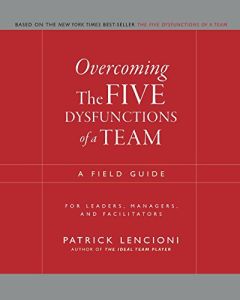
Book
Overcoming the Five Dysfunctions of a Team
A Field Guide for Leaders, Managers, and Facilitators



Clique com o botão direito no código para copiar a imagem.
Nota: Em um portal em ASP, o link atrás do código é específico do portal!
Recommendation
Patrick Lencioni wrote this as a follow-up to his 2002 “fable,” The Five Dysfunctions of a Team. It applies the earlier book’s concepts, and suggests many exercises, approaches, examples and explanations you can use as you apply those ideas. If you found the first book useful, you’ll want this one, though you can still get a lot of utility from it even if you haven’t read the original. Lencioni recaps his concepts clearly here, including developing trust among team members and keeping teams focused on their goals. The result is broadly applicable. getAbstract believes that readers who want a basic introduction to improving team function will appreciate this book. That said, those looking for more complex or theoretical approaches, or for tools to deal with specific challenges, such as knowledge management among teams, may need a more advanced manual.
Summary
About the Author
Patrick Lencioni, founder and president of a management consulting firm, has worked with Fortune 500 senior executives and high-tech startup companies. He is the author of several other books, including The Five Dysfunctions of a Team and Death by Meeting.
By the same author
Learners who read this summary also read
Related Skills

领导力

加强团队协作,协调项目的团队工作策略,建立团队互动的协议,鼓励团队内的同伴合作,克服团队协作中的障碍

培养创新文化

人力资源

创新

领导自我

管理员工关系

管理团队和部门

管理

精通协作

精通人际关系技巧

应对领导挑战,处理工作中的复杂领导困境,有效应对具有挑战性的领导场景,克服团队领导中的障碍,识别领导

个人成长

促进多样性、公平与包容

软技能

职场技能

促进讨论

勇于脆弱

提升团队表现

营造归属感

化解冲突

培养团队文化,创建强大的团队认同感,鼓励开放的团队讨论,促进共同的团队价值观,有效地认可团队成就,平

激励团队

承担个人责任

赢得他人信任

推动团队绩效,创建团队有效性的框架,评估提升团队产出的策略,通过明确的指导增强团队协作,解决团队生产

建立团队凝聚力

理解团队动态

确保团队责任落实

建立心理安全感

Comment on this summary