



We currently cannot offer you an audio version of this summary.



Clique com o botão direito no código para copiar a imagem.
Nota: Em um portal em ASP, o link atrás do código é específico do portal!
Recommendation
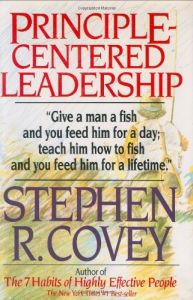
Stephen R. Covey shows how you can become a principle-centered leader, and how you can use principle-centered leadership philosophies to more effectively manage people. Principle-centered power is created when the values of the follower and leader overlap. Control is apparent, but it is not external; it is self-control. It elicits a willingness to risk doing the right things because they are valued and modelled by the leader. People follow the leader because of who he or she is. This book is full of lists, charts, diagrams and anecdotal examples to help the reader fully comprehend the ideas contained within. The cover of the book has the famous quote, "Give a man a fish and you feed him for a day; teach a man to fish and you feed him for a lifetime." This quote encapsulates the intentions of the book. Covey wants to teach you how to fish. And he wants you to know it’s not as simple as picking a lure and casting. Good fishermen learn through years of applying their skills. Managers become good managers through years of applying principle-centered leadership. getAbstract recommends the book to managers and executives at all levels.
Summary
About the Author
Stephen R. Covey is an internationally respected leadership authority, teacher, organizational consultant, founder of the former Covey Leadership Center, and co-chairman of Franklin Covey Co. He has made teaching Principle-Centered Living and Principle-Centered Leadership his life’s work. He holds an M.B.A. from Harvard and a doctorate from Brigham Young University. He has been recognized as one of Time magazine’s twenty-five most influential Americans. His other bestsellers are The 7 Habits of Highly Effective People and First Things First.






Comment on this summary