
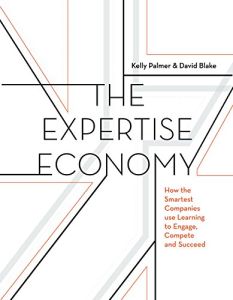
Book
The Expertise Economy
How the Smartest Companies Use Learning to Engage, Compete and Succeed
Nicholas Brealey Publishing,
2018
更多详情
THE EXPERTISE ECONOMY by Kelly Palmer & David Blake. Summarized by arrangement with Nicholas Brealey Publishing. Copyright © 2018 Kelly Palmer & David Blake
ISBN: 9781473677005
Pages: 256
ISBN: 9781473677005
Pages: 256



扫码即可阅读分享此浓缩书
Recommendation
Kelly Palmer and David Blake explain that today’s leaders should focus on skills as part of their business strategies. They must support self-directed and peer learning by investing in practices and technologies that empower employees to manage their own learning and career goals. Workplace learning has changed in leading organizations and among top employees. With near unlimited, often free and frequently high-quality learning available – everywhere and anytime – active learners no longer need to wait for corporate training. Education has to change; Palmer and Blake, executives at the education technology company Degreed, show you how. With the caveat that the book also promotes their firm, getAbstract recommends this indispensable leaders’ guide to modern workforce development to executives, managers, teachers, learners and even parents.
Summary
About the Authors
Formerly the chief learning officer at LinkedIn, Kelly Palmer is now part of the executive team at Degreed, an education technology company where David Blake is co-founder and executive chairman. getAbstract has a content partnership with Degreed.
Learners who read this summary also read
Related Skills

人工智能转型,实施基于人工智能的流程优化,跨部门整合人工智能解决方案,评估企业采用人工智能的准备情况

变得更加适应变化

数字化转型

发现人工智能的应用案例,识别商业中潜在的人工智能应用,探索人工智能在工作场所改进中的可能性,分析人工

启用数字化组织,促进数字化组织变革,提高运营中的数字化效率,支持数字工具的整合,为数字平台调整工作流

人力资源

利用人工智能进行人力资源管理,将人工智能洞察融入人力资源战略,实施自动化人力资源数据分析系统,利用人

在日常任务中利用人工智能,将人工智能工具整合到工作流程中,使用人工智能自动化重复性任务,利用人工智能

管理学习与发展,制定企业学习战略,管理员工学习路径,评估团队的发展需求,优化学习资源分配,评估培训项

个人成长

理解人工智能,向同事解释基本的人工智能概念,区分人工智能与传统软件解决方案,总结人工智能在现代工作场

职场技能

打造学习体验

利用学习与发展技术

发现教育领域的人工智能应用案例,识别学校中的人工智能应用,分析人工智能对教育系统的好处,利用人工智能

利用人工智能进行学习和技能提升,寻找员工培训的人工智能工具,将人工智能融入学习计划,利用人工智能进行

追求终身学习

理解学习

养成学习习惯

提升员工技能和知识

了解人工智能对学习和认知的影响,评估人工智能对教育方法的影响,评估人工智能工具对认知发展的作用,认识

培养成长型思维

利用人工智能进行学习与发展,将人工智能工具整合到培训项目中,通过人工智能洞察提升员工成长,利用人工智

衡量学习与发展的影响

成为自驱学习者

推动学习文化

Comment on this summary